
What it's like to fly on Air New Zealand's new Airbus A321neo
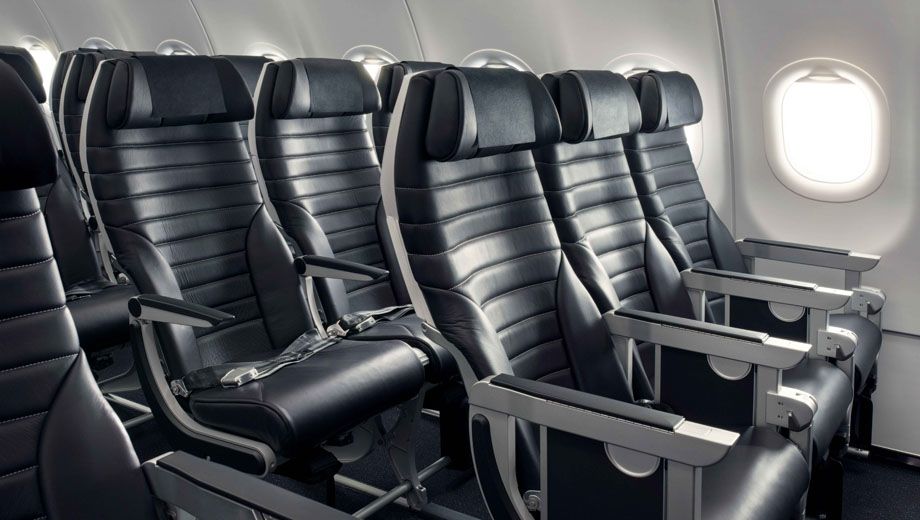
Air New Zealand’s first and factory-fresh Airbus A321neo is now flying, making its debut as NZ739 from Auckland to Brisbane on Friday November 23, and soon to appear on flights to Sydney and Melbourne as well.
It’s the first of 13 new Airbus ‘neo’ (New Engine Option) aircraft to join the AirNZ fleet, and Australian Business Traveller was on board its inaugural passenger flight to see what the next-gen jet has to offer.
Air New Zealand’s Airbus A321neo: seating
With an all-economy layout spanning 214 seats in a 3-3 configuration, these planes come without business class…
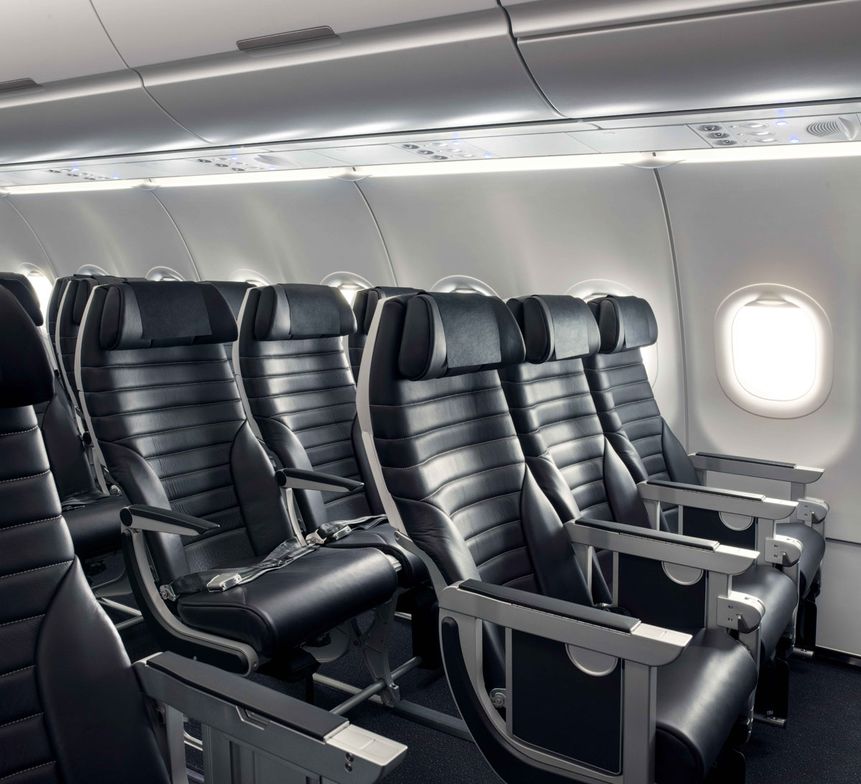
… the closest substitute being the ‘Works Deluxe’ experience, when you purchase the highest-price economy class airfare.
This pairs the typical business class staples of priority check-in and boarding with extra space on board – that’s in an economy class bulkhead row, extra-legroom or ‘Space+’ seat – along with complimentary meals and alcoholic drinks, and two checked bags (although not lounge access).
Works Deluxe passengers also have a ‘neighbour-free guarantee’, which means the middle seat in these rows will be kept empty to provide some extra elbow room, too: similar in concept to Euro Business, but which allows your ticket to still say ‘economy’:

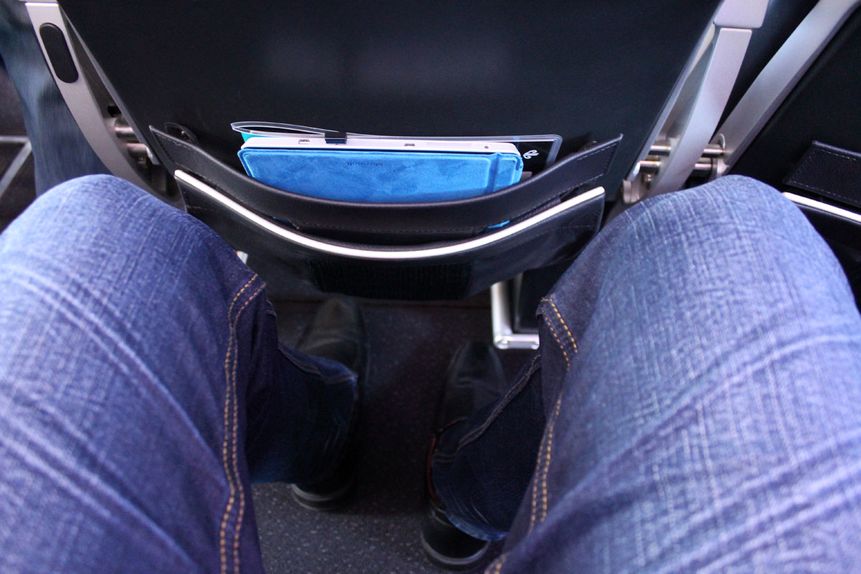
Assuming you’re in one of these extra-legroom seats, knee room is more than ample – most seats have a pitch of 83cm (32.7 inches – pictured), although some are a little cosier at 81cm/31.9 inches.
Read: Best seats aboard Air New Zealand’s Airbus A321neos
There’s ample space to stretch forward…
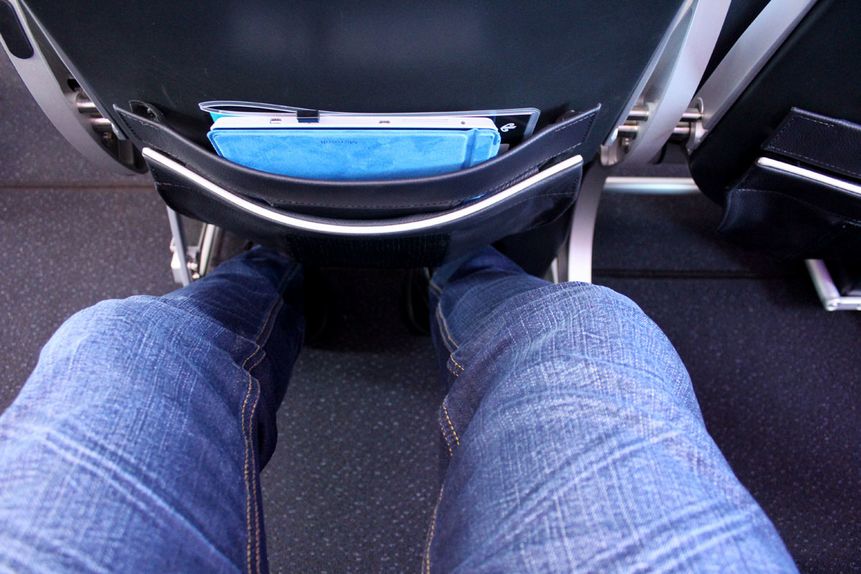
… including at the bulkhead, where I could only just reach the bulkhead wall when seated, despite being 6ft tall:
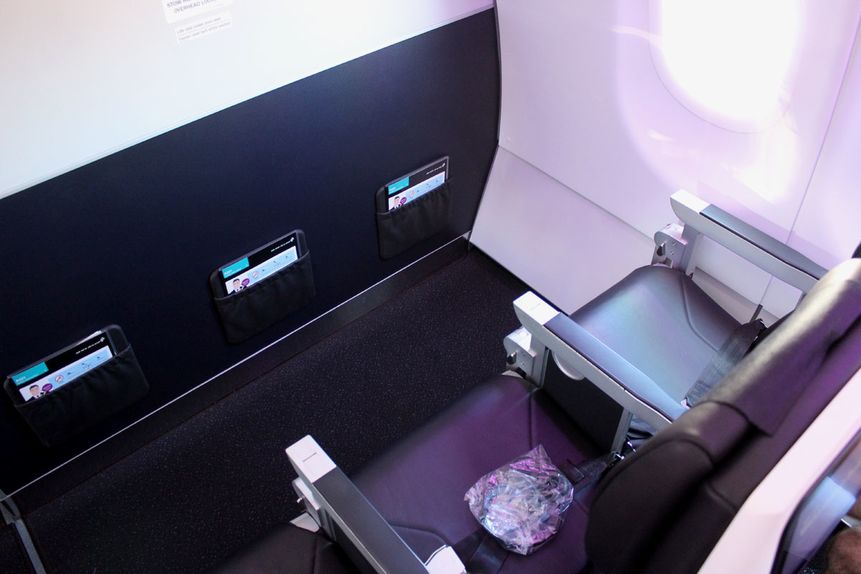
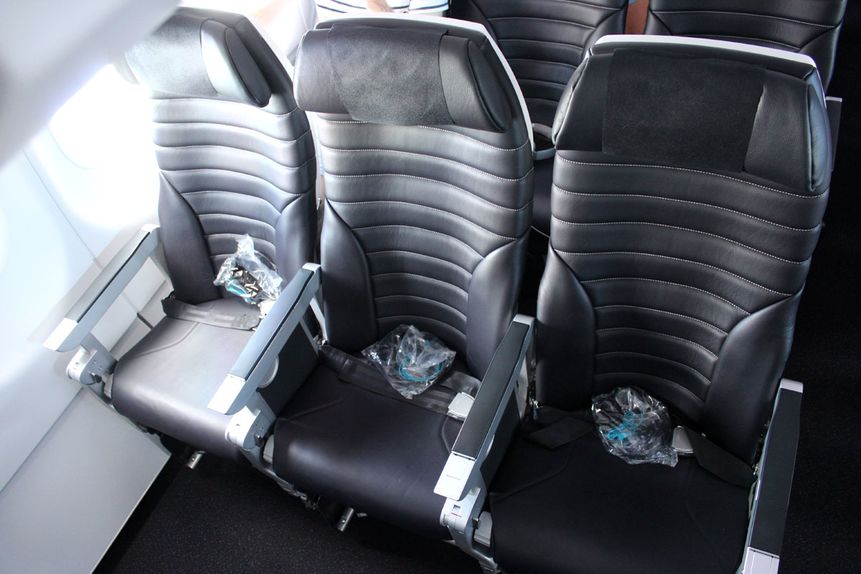
Of note is that while the window and aisle seats measure at 44cms wide, the middle seats in every row are actually 2cm wider, so while that’s probably not enough incentive to forgo your usual window/aisle preference, if you do get stuck in the middle, there’s at least a little more space:
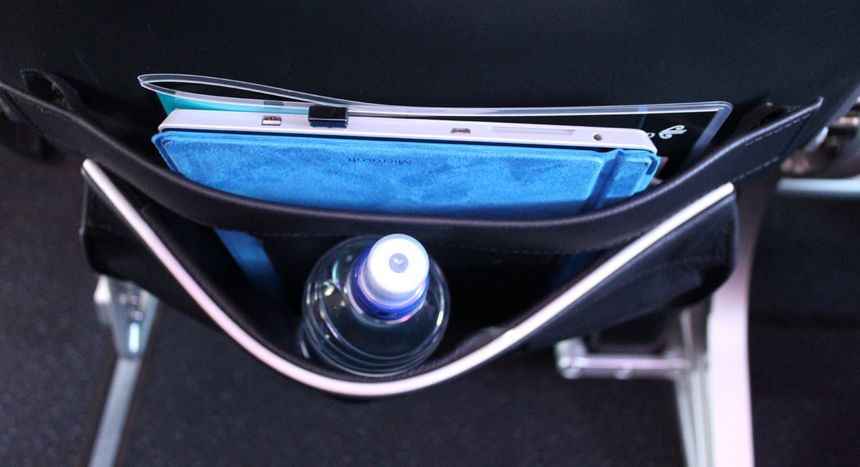
In front of you sits a dual compartment pocket – the section at the back is best for larger, thinner items like tablets, laptops and iPads…
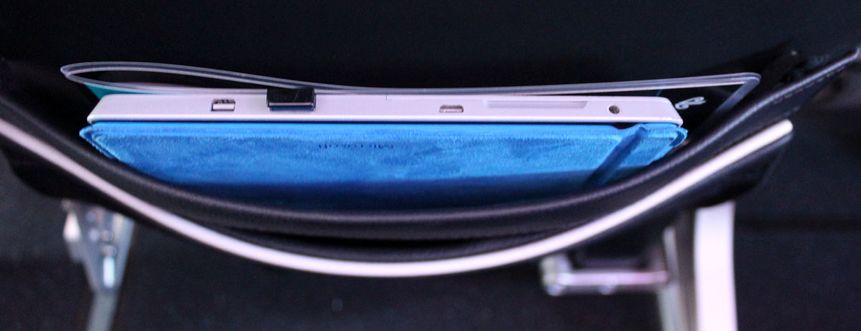
… while the section closest to you accommodates water bottles and the like. Being a new aircraft, the pockets are particularly tight, so you may need to pull its leading edges towards you to properly access the space:
Above that, a fold-down tray table…
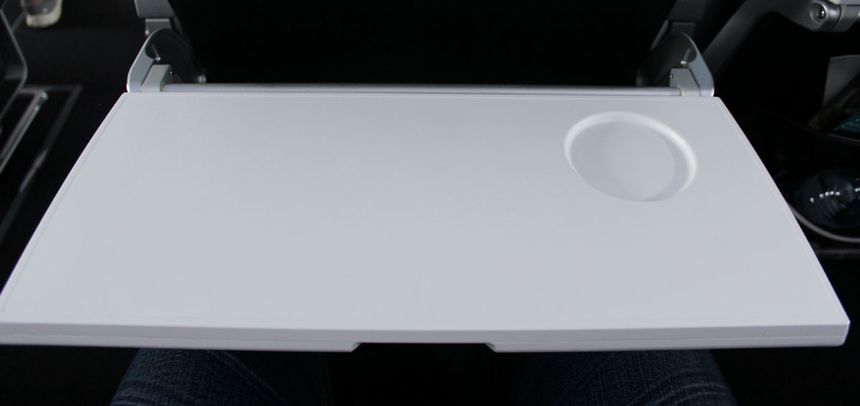
… which is adequate for dining, but on the smaller side for any laptop work. I was still able to type comfortably on my Microsoft Surface, which already places the centrally-mounted keyboard at a downward angle by design, but this may not suit all devices.
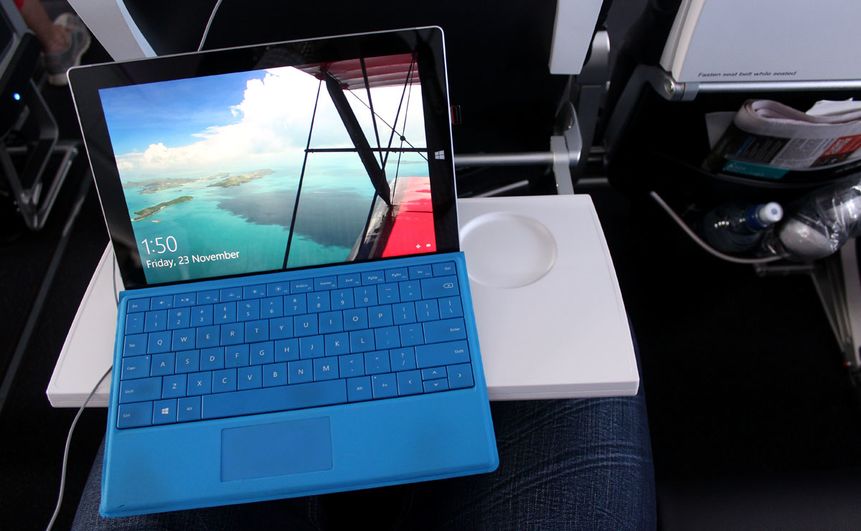
To the seat itself, I found it relatively comfortable when sitting upright, given it has an adjustable headrest and plenty of padding, but when working on my laptop, edged it back just slightly for a tad more working space, which still gave plenty of room for the passenger behind.
Air New Zealand’s Airbus A321neo: inflight entertainment
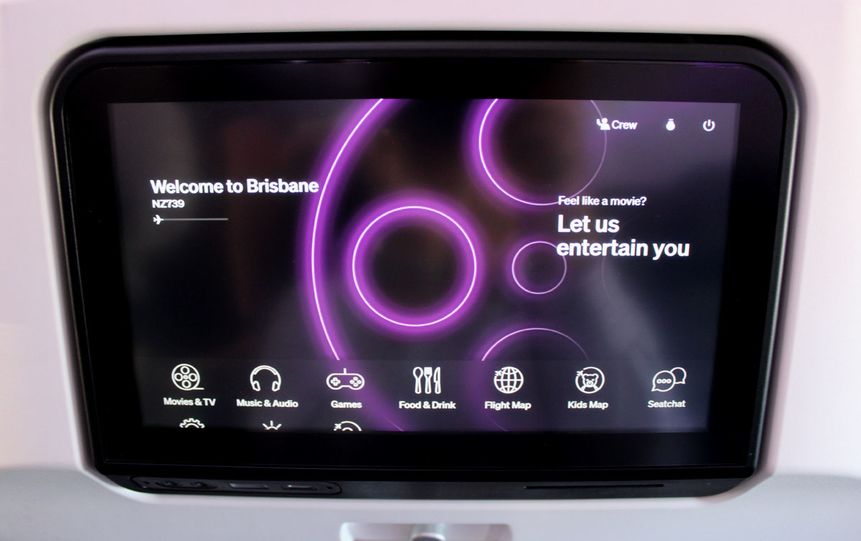
While some airlines are making a push towards entertainment served on passengers’ own devices, that’s not the case here…
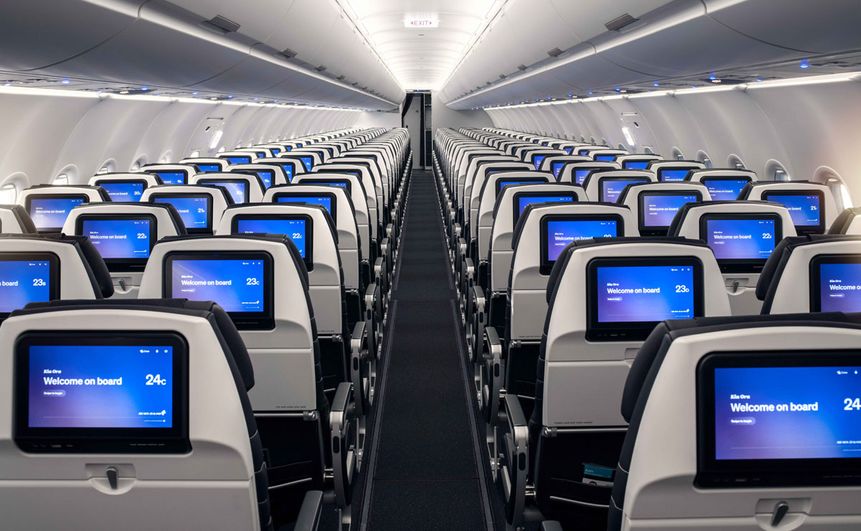
… with content provided via fixed entertainment screens, which respond to soft touches and swiping gestures – unlike older inflight monitors which need to be pressed much harder or with the tip of your nail.
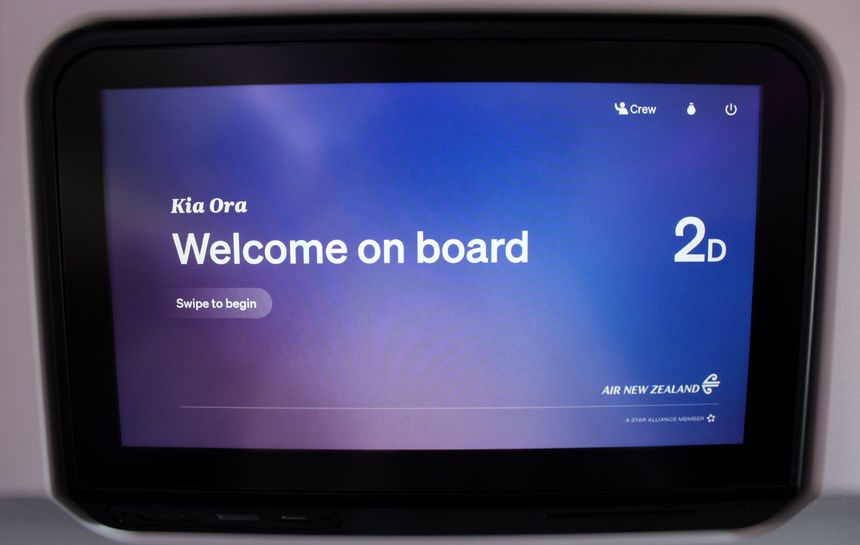
The content you’ll have access to depends on the fare type you’ve booked. Passengers travelling on Seat and Seat+Bag tickets have access to complimentary TV shows, music and games (movies available for purchase), while guests on Works and Works Deluxe fares get movies at no extra charge.
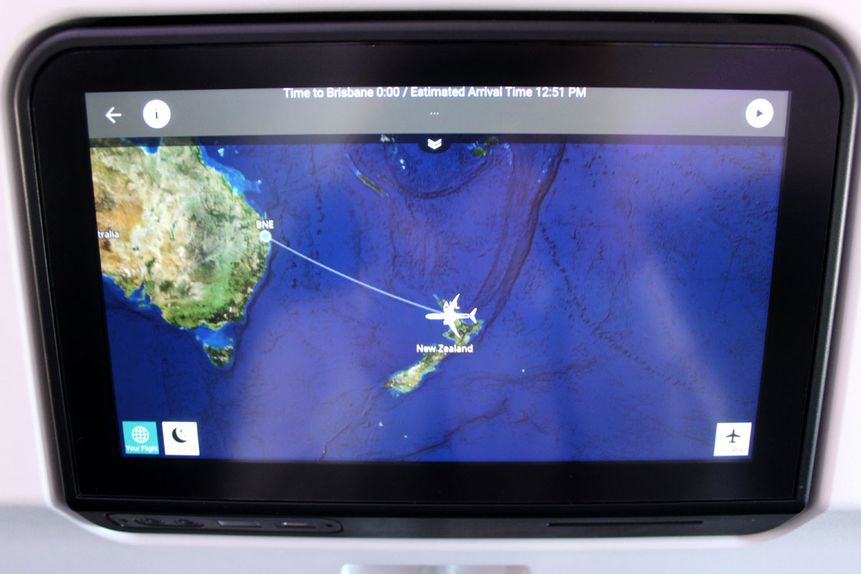
Naturally, all passengers can view the moving map…
… and tucked away below the display monitor are two headphone connectors. You can plug a regular, single 3.5mm headphone connector into either port for stereo sound; a dual-pin aircraft-type plug, again for stereo sound; or can connect two pairs of headphones to watch a movie together with your seatmate.

Next to that, you’ll also find a typical USB power port for charging small devices like smartphones, alongside a slim USB-C outlet: useful if you have a relatively new device that adopts this standard.
However, this is instead of a standard AC power port, so if your device isn’t USB-C capable, or it doesn’t charge via USB at all, you’re out of luck.
Even then, the outlet supply is limited to 27 watts, which is ample for smartphones and tablets and sufficient for a 29-watt MacBook Air, but as larger MacBook Pro models ship with chargers of up to 87 watts – ditto other larger laptops – these devices will charge slowly at best, or when in use, lose their charge at a lower rate than running on battery power alone.
Air New Zealand’s Airbus A321neo: inflight WiFi
Finally, this aircraft – and all of AirNZ’s future ‘neo’ jets – will offer inflight Internet, as is already available on some of Air New Zealand’s other planes.
On this inaugural flight, all passengers had complimentary access, although normal pricing is NZD$30 for a flight pass on journeys between Australia and New Zealand, as was charged on my Boeing 777 flight from Brisbane to Auckland earlier the same week.
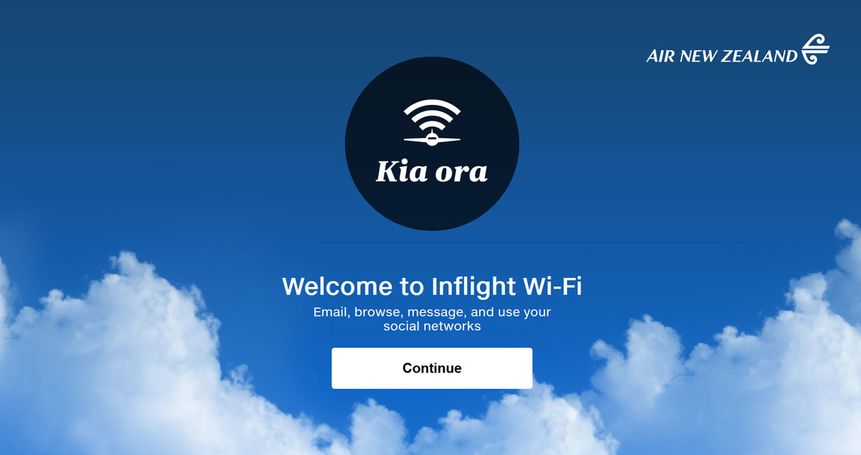
Being the plane’s first passenger flight, the WiFi service was still being tweaked with engineers on board, and went offline for about half an hour after take-off while the system rebooted. When it came back online, downloads of 1.4-4.7Mbps and uploads of 3.2-5Mbps were measured.
That’s very reasonable for a satellite connection, particularly in the sky, and was more than usable as it wasn’t ‘announced’ that the connection was free – only revealed if you logged in for access – but if every passenger had connected, those speeds wouldn’t have been achievable, of course.
All in all, Air New Zealand’s Airbus A321neo is a welcome addition to Australian skies, and while it may not feature business class as on the airline’s Boeing 777 and 787 jets, the Works Deluxe experience isn’t a bad option if one of these all-economy flights is the best fit for your schedule.
Just note, airport lounge access isn’t included as standard with Works Deluxe and can’t be purchased from AirNZ, so have your Star Alliance Gold card or Air New Zealand Koru membership card attached to your booking for access to the airline’s lounges – or a Priority Pass card for other lounge options.
Also read: Five things you need to know about AirNZ's A321neo
Chris Chamberlin travelled to Auckland as a guest of Air New Zealand.