
Skip those London passport queues with a UK Registered Traveller card
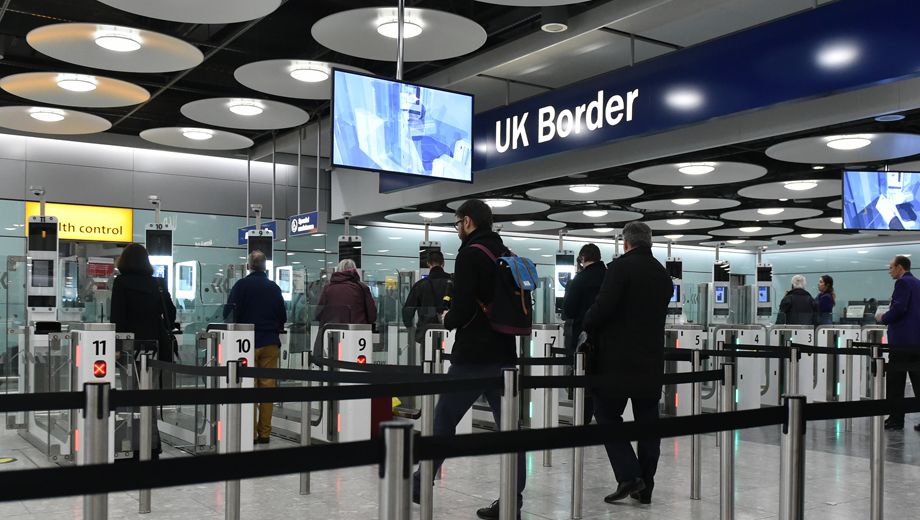
The United Kingdom’s Registered Traveller program allows regular UK visitors to bypass the queues at passport control – including the often-lengthy lines at London’s Heathrow Airport after those long flights from Australia – in favour of whisking through the UK and EU lanes like a local, without even completing a landing card.
However, membership in the program isn’t cheap, setting you back $122 in the first year alone, with extra fees charged when getting a new passport, travelling with children or to renew your membership after 12 months.
So, is it worth it? Here’s what you need to know.
UK Registered Traveller: what it does
When Australian travellers enter the United Kingdom, they normally need to join the ‘other passports’ queue at the border. Because it’s the same line used by most other foreigners from all over the world, lines can be lengthy: and especially so at busy airports like Heathrow.
But with a Registered Traveller membership, globetrotters are instead granted access to the lines otherwise reserved for UK and EU citizens, along with the ePassport gates for automated clearance (similar to Australia’s SmartGate) – both of which tend to be faster, getting you out of the airport sooner.
Once enrolled, this works when arriving internationally at London’s Heathrow, Gatwick, City, Luton, Standsted and Southend airports, along with airports in Birmingham, Bristol, Cardiff, East Midlands, Glasgow and Manchester, and at the Eurostar terminals in Brussels, Lille and Paris when bound for the UK.
This also removes the requirement to complete a UK landing card, saving even more time.
UK Registered Traveller: eligibility
To join the Registered Traveller scheme, you’ll need to hold a UK visa or entry clearance, or have visited the UK at least four times in the 24 months immediately prior to submitting your application for business, general/tourism, academic travel or transit travel (where you crossed the UK border, as opposed to remaining airside).
You can also apply if you’ve visited the UK for entertainment or sports purposes, have a child in a UK school, are a member of a diplomatic mission or are a medical visitor, although the four-visits-within-24-months rule still applies.
Further, you’ll only be eligible if you have a passport issued by certain countries – this includes Australia, New Zealand, Hong Kong, Singapore, Canada, the United States and more: for a full list, see here on the UK Government website – and you also need to be aged 18 years or over.
If you’ve travelled to the UK three times in the past 24 months as an Australian passport holder, you’ll only be able to apply for Registered Traveller after completing your fourth visit: you can’t apply and use visit #4 to both finalise your enrolment and satisfy this rule.
There are separate policies for travelling with children and attaching them to your membership, but we’ll let you browse the Registered Traveller website for those details.
UK Registered Traveller: the application process
If you think you meet the requirements, you can apply through that Registered Traveller website, by providing the information requested and answering questions about your travel history and any criminal convictions you may have.
You’ll need to have your passport handy, and a major credit card to pay the £70 (A$122) application fee, which covers up to 12 months of initial membership from the day you first lodge your application.
Once submitted, it can take the UK Border Force up to 10 working days to process your application, given the need to complete background and immigration checks, although in my experience, it took only five working days to gain ‘provisional acceptance’, as notified by email.
When you receive this, it means the UK’s background checks are all complete, but you’re not finished yet: you still need to complete your membership enrolment in person, by going through the ‘normal’ UK passport lane one last time and filling out a landing card, as you usually would.
When you arrive at the passport desks, tell the officer that you have a pending Registered Traveller membership and request they complete the process – typically, they’ll ask you a few extra questions than normal and make their determination.
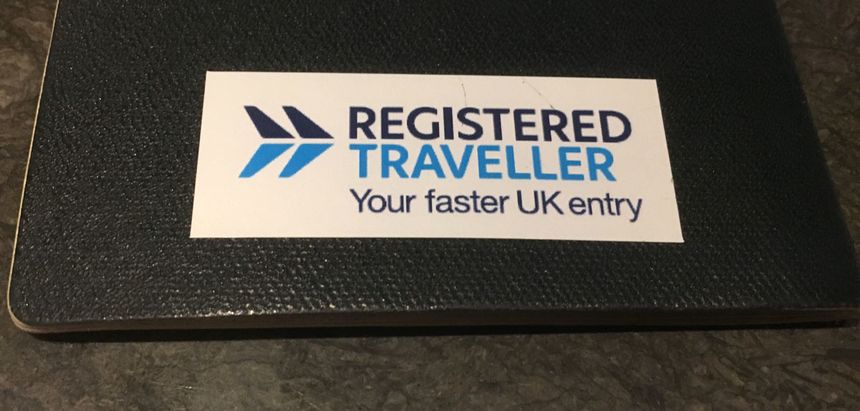
If everything is clear, you’ll receive either a Registered Traveller membership card or a sticker on the back of your passport, which doesn’t actually ‘do’ anything, but can help indicate to airport staff that you are in the correct passport channel if challenged: most Australian passport holders can’t use the UK/EU lines, after all – this is a special perk unique to Registered Traveller.
In my experience though, there’s one more step before your passport will become active in the ePassport gates as part of the Registered Traveller scheme, and it’s this: you need to wait receive a confirmation email from the UK Home Office that your membership has been finalised, which generally comes about 48 hours after crossing the UK border when your enrolment was completed.
That wouldn’t be an issue for most travellers who probably wouldn’t be re-entering the UK within 48 hours of their first entry, but with a hectic schedule calling for a day trip to Brussels the day after I arrived in the UK, returning to London that evening, I found my passport not working in the ePassport lanes at Heathrow after touching down again.
Fortunately, Border Force staff manning the nearly UK/EU passport lane were most obliging in processing me through as they could see my Registered Traveller membership in their system, but it’s something to keep in mind if you’ll be darting back and forward from the UK during your own travels.
(If your application is ultimately declined, you’ll instead receive a refund of £50 (A$87).)
UK Registered Traveller: renewing your membership
Not only does that email confirm your Registered Traveller membership has been fully-activated, but it also reminds of your membership expiration date:
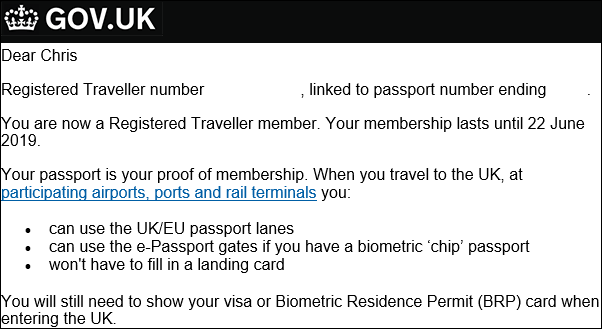
Before that date, you’ll have the option of renewing your membership online for another year at a reduced cost of £50 (A$87) – but if you let it lapse, you’ll have to go back to using the regular, ‘other passports’ lane like everybody else, so mark that date in your diary!
If you get a new passport during your membership year, such as because yours was expiring, was filled with stamps or was lost or stolen, you’ll also need to update your passport details for Registered Traveller membership at a fee of £20 (A$35), to continue using the UK/EU passport lanes.
This fee is in addition to the amount paid up-front or to renew your membership, but if unless your passport matches your Registered Traveller profile, you’ll also have to use the ‘other passports’ line like everybody else.
Knowing that my passport would soon be up for renewal, I asked the Border Force officer who completed my enrolment for an extra ‘Registered Traveller’ sticker to take with me and use after I'd renewed my passport, and they were happy to provide one, given the ‘switcheroo’ is done entirely through the Registered Traveller website, which otherwise gives you no sticker or card to flash if needed.
Overall, the UK Registered Traveller scheme is a time-saving initiative for frequent visitors to London and the United Kingdom – particularly when even the ‘fast track’ passport line at Heathrow can take an hour or more to clear – but with high initial and ongoing costs paired with a complex and lengthy application and approval process, you’d need to be visiting the UK very regularly to get your money’s worth.