
How to get a Shenzhen visa on arrival when visiting from Hong Kong
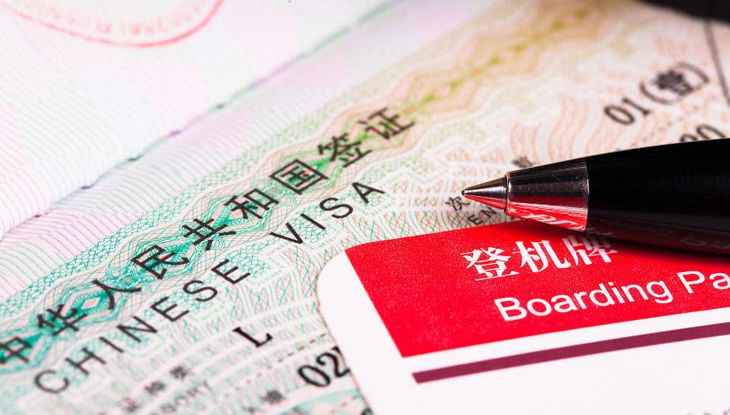
If you're making a quick side-trip from Hong Kong to Shenzhen, you'll need a visa to cross over the border at China – but this doesn't have to be a Chinese visa, as the country also issues special Shenzhen visas which are available on arrival at the border checkpoint.
These single-entry visas are good for just one visit, although you can stay up to five days – and your excursions are limited to the Shenzhen Special Economic Zone, which includes greater Shenzhen and Shekou and the surrounding countryside, but not Guangzhou or the greater Guangdong region.
The Shenzhen visa costs ¥168 ($34) for Australian passport holders and residents of most other countries, but some two dozen countries pay a higher fee – this includes ¥304 (£35) for Great Britain and ¥956 (US$150) for the USA. Both cash and credit cards are accepted for payment.
Here's how to get your Shenzhen visa on arrival at the Hong Kong - Shenzhen border crossing of Lo Wu, which is where most travellers come across by train from Hong Kong.
Read more: How to travel by train from Hong Kong to Shenzhen
We’ll proceed on the basis that you’ve passed through Hong Kong immigration, crossed the footbridge over the Sham Chun River and are headed for the Chinese immigration checkpoint.
Go all the way to the Chinese immigration gates – there’ll be a duty free shop on your right – and watch for the Port Visa sign on the left.
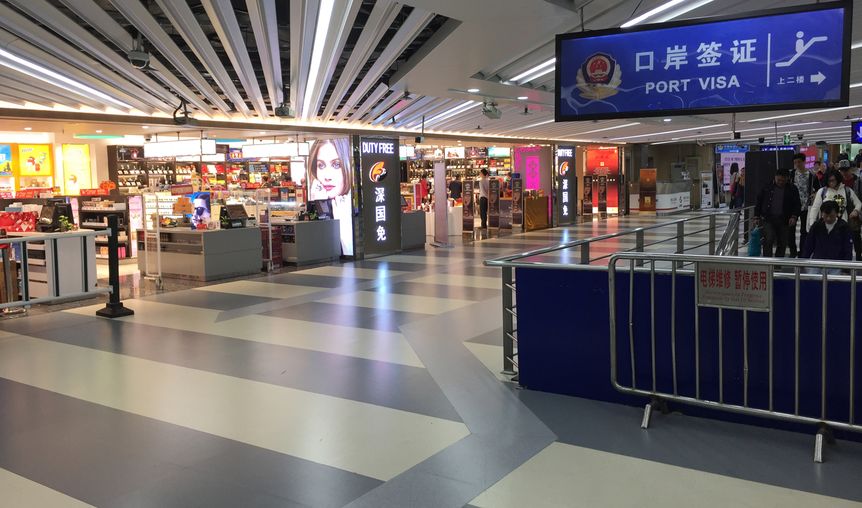
If you don’t see it, veer to the left side of the immigration checkpoint and double back – you should see a set of escalators which will take you upstairs to the visa office.
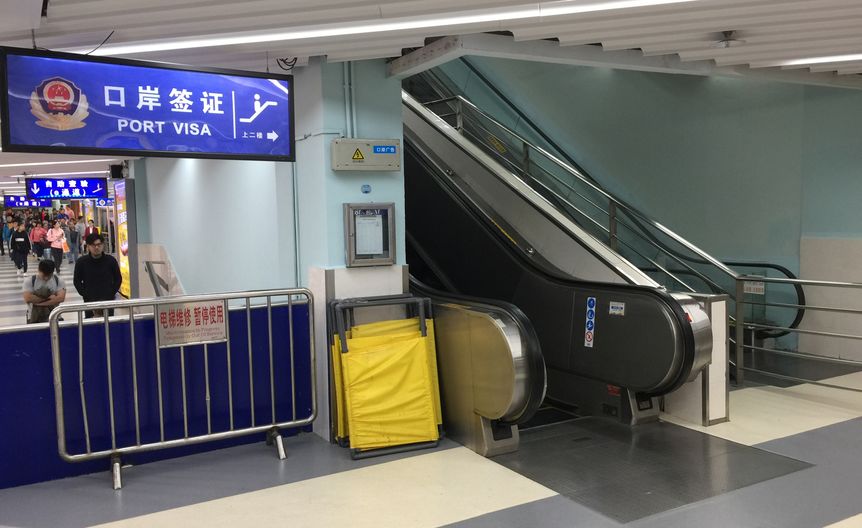
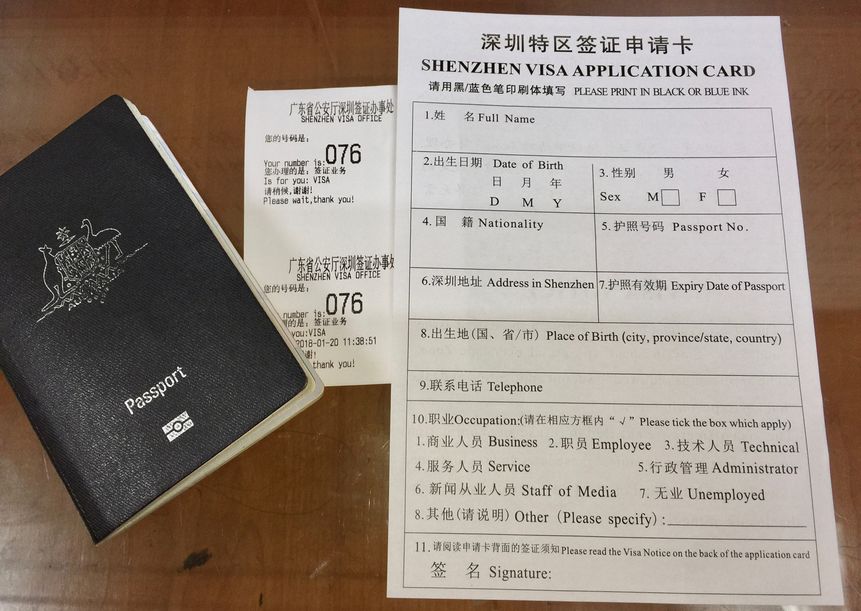
Grab a visa application from the desk outside the office (and make sure you have a pen handy, maybe bring one from your hotel)...
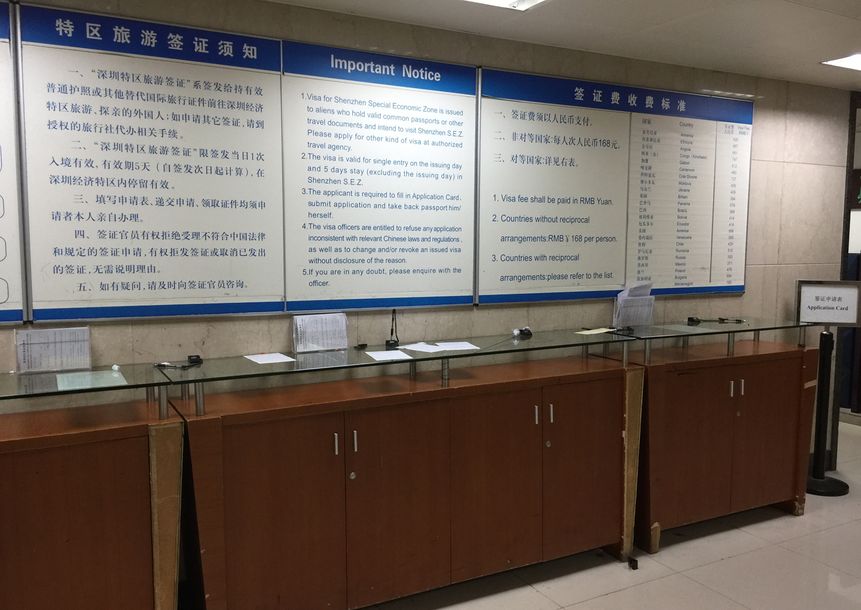
... then walk into the office, take a queue ticket from the machine at right, then sit down and fill out your form.
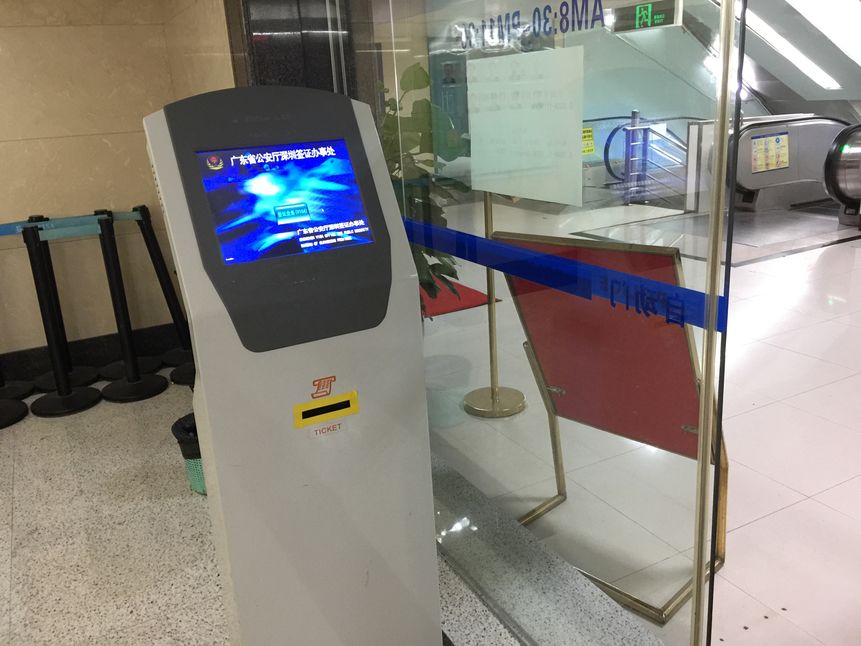
If you’re just visiting for the day, in the section of the form asking for your address in Shenzhen it’s sufficient to write ‘Shenzhen’.
(Don’t stand at the counter to fill out the form and then take a ticket – you’ll just spend extra time sitting around waiting for your number to be called.)
Now begins a step-by-step process which can take anywhere from 10 to 30 minutes depending on the crowd, and which sees you bobbing up and down again as your application progresses through the system.
The first step is that your ticket number will appear above one of the Application windows.
Hand over your visa application form, passport and queue ticket. The customs officer will take your photo and hand back the scrub of the queue ticket.
Sit back down again and wait for your number to appear in the next window along.
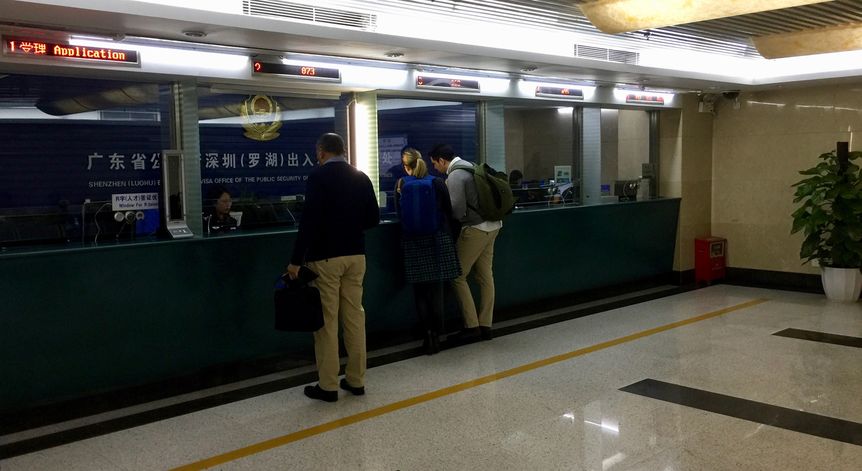
Head to that window with your ticket and your ¥168 in hand; you’ll be handed back the ticket stub and sent back to your seat.
Now it’s just waiting for your number to appear atop the Collection window at the far right.
This stage appears to take the longest, but when it’s done you’ll have your passport with a Shenzhen visa.
Head downstairs to the Chinese immigration checkpoint, grab an arrivals slip from the desks at far right (you can write ‘Shenzhen’ for your address if staying just for the day, and if you came by train from Hong Kong write ‘MTR’ as the flight number.
Again, this is when it’s handy to have your own pen, because you can join the queue and and fill out the form while standing in line.
Once you’re through customs, head for the ‘Nothing to declare’ lane and place your passport, opened at the photo page, into the e-Channel gate, then go through the security checkpoint.
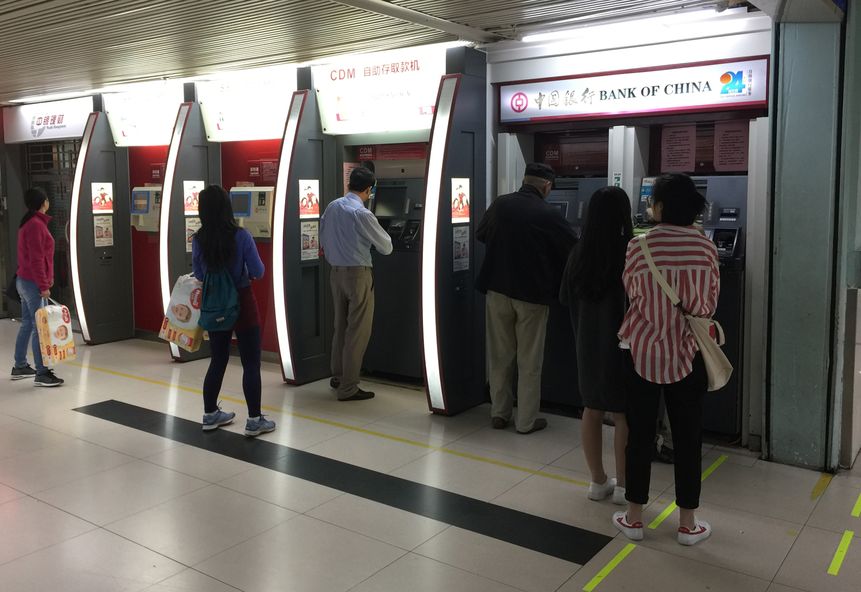
If you’re short on local currency there’s a row of ATM machines to the left.
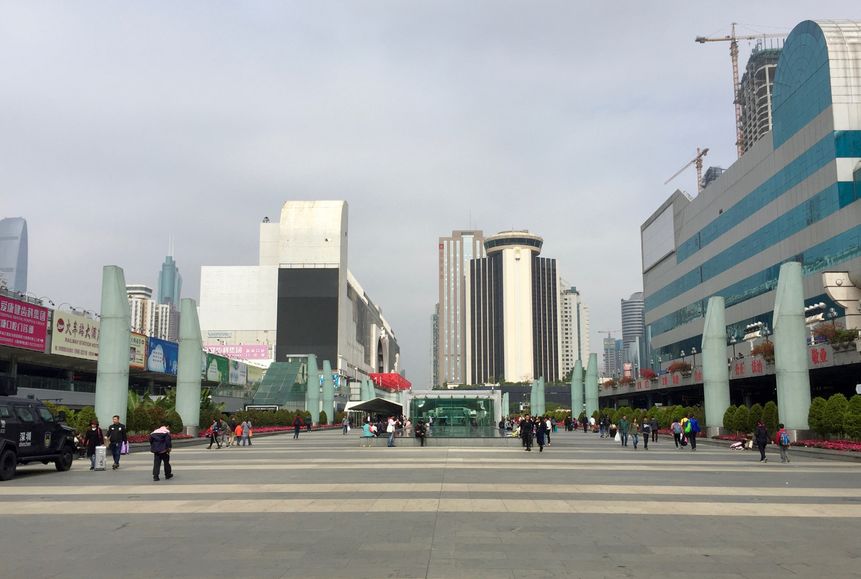
After the relative quiet of the immigration ares you’ll walk out into a maelstrom of noise and people and touts – welcome to Shenzhen!
Walk straight ahead for entry to the Shenzhen metro subway, or turn right for the Luohu Commercial City shopping plaza.
When you’re returning from Shenzhen, note that foreigners should proceed to level 2 of the immigration building, while Chinese nationals head to level 3. Again, don’t follow the signs to the e-Channels, as those are only for Hong Kong and Chinese nationals.