
RIP superjumbo: Airbus axes the A380
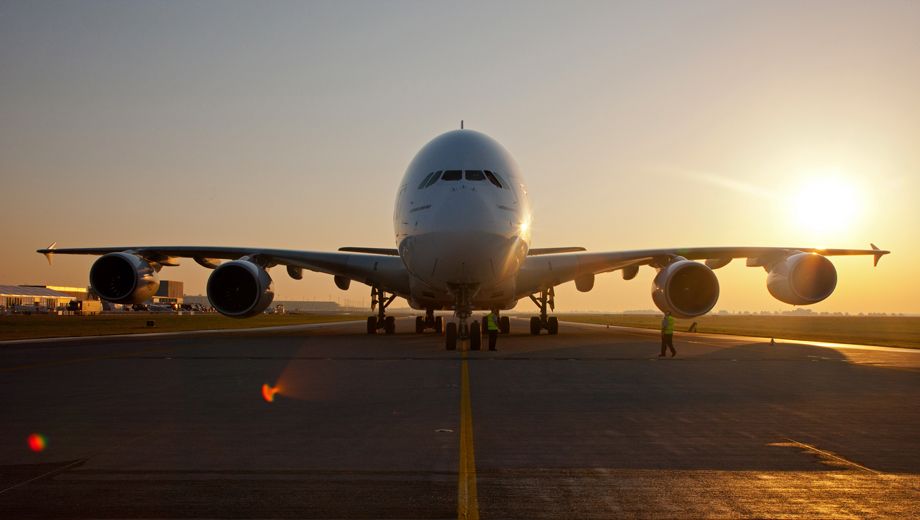
After almost a dozen years, Airbus is pulling the plug on its A380 superjumbo.
The last of the double-deck behemoths will roll out of Airbus' hangar in 2021 and be handed over to Emirates, the stalwart airline which has essentially kept the A380 alive in recent years through repeated orders of the world's largest passenger plane jet.
However, like many other airlines, Emirates has been looking more closely at the new wave of fuel-efficient twin engine jets such as the Airbus A350 and Boeing 787.
The boom was lowered when Emirates cancelled an outstanding order for 39 A380s – valued at a staggering US$17.4 billion based on Airbus' list price - which was necessary to keep the production line moving.
“As a result of this decision we have no substantial A380 backlog and hence no basis to sustain production, despite all our sales efforts with other airlines in recent years," remarked Airbus CEO Tom Enders. "This leads to the end of A380 deliveries in 2021."
“The A380 is not only an outstanding engineering and industrial achievement. Passengers all over the world love to fly on this great aircraft," Enders added. "But, keep in mind that A380s will still roam the skies for many years to come and Airbus will of course continue to fully support the A380 operators."
Emirates will pick up the keys to the world's last 14 superjumbos over the next two years, having switched its Airbus order to 30 of the more modern A350-900 jets along with 40 of the A330neo models.
Recent weeks saw Qantas officially confirm its long-held decision to cancel the final eight A380s in its initial order of 20, while Qatar Airways said it would begin retiring its own A380s once they reached the 10-year mark, beginning in 2024.
Also read: Here are the Airbus A380 first class concept cabins you never saw
Airbus' decisicion means the iconic double-decker, which commonly seats more than 600 and has wowed travelers with in-flight showers and bars, is now entering its twilight years.
First imagined by Airbus in 1994 under the moniker A3XX, the superjumbo was a calculated roll of the heavy metal dice: was the air travel market large enough, and would that rich vein pump for long enough, for so ambitious an airliner?
Early backers included Emirates and Singapore Airlines, with smaller orders from Qantas (who eventually took just 12 of 20) and Virgin Atlantic (who took none).
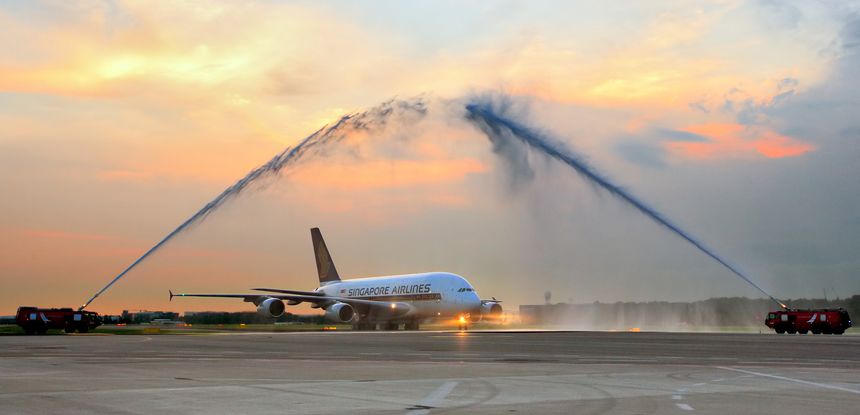
From its inception, the A380 was a grand European project. The wings, like those of all Airbus aircraft, came from the U.K., components were ferried across the continent from production sites in Germany and France. The giant fuselage tubes were taken by barge and flat-bed truck to the main facility in Toulouse, and the planes were then painted and kitted out in Hamburg.
Teams from across the region joined colleagues at other sites during crunch times, the quirky-looking Beluga freight planes would crisscross countries with parts, and the A380 was a popular backdrop at air shows for politicians celebrating Europe’s achievements.
When the plane finally embarked on its first commercial flight in late 2007, the financial crisis that would cripple global travel was already on the horizon. Some customers had second thoughts about whether the giant aircraft was the right choice for meager times, and cancellations started piling up.
Over its twelve years in the sky, the colossal A380 was a prestige project which became a heavy chain around Airbus' neck: a plane that won the hearts of passengers but never the broad support of airlines, in comparison to smaller, more fuel-efficient aircraft.
More than just an airplane
The A380 was always more than an aircraft, albeit a very large one. For Airbus, the superjumbo offered a commanding counterweight to Boeing, promising unparalleled space and luxury for increasingly congested airports and the skies above.
Airbus had watched enviously as Boeing monopolized the market for very large aircraft with its 747 jumbo, which celebrates its 50th anniversary this month and sold more than 1,500 units.
While Airbus was a major force in the single-aisle space with its A320 family, the prestigious long-distance and ultra-large aircraft segment remained the domain of its U.S. rival.
With passenger numbers rising every year and major new hubs opening in markets like Dubai, the A380 seemed the obvious choice to address the need for a large people carrier, while picking market share off Boeing.
Dubai did in fact turn into the A380s major sponsor, with Emirates ordering a total of more than 160 units, far in excess of any other airline. But ironically it was also Emirates that contributed to the A380’s decline and fall.
With Airbus increasingly reliant on a single customer for its flagship product, Emirates could make or break the program by ordering or canceling more A380s. When the airline decided to rethink its latest order for 20 units, Airbus saw no choice but to draw down production, given the lack of other buyers.
Rise of the 'big twins'
But over the past two decades, a new breed of aircraft gained popularity, making life harder for the A380 and the Boeing 747, which has also struggled with the latest passenger version of its iconic hump-backed plane.
While the A380 represented an Airbus bet on congestion driving demand for ever-larger aircraft in mega-hub airports, Boeing in the early 2000s decided the future would lie in smaller long-range planes that could economically overfly the hubs and directly connect smaller markets.
Its Boeing 777 model remains a best-seller, while the smaller 'fresh-thinking' 787 Dreamliner aligns with the Airbus A350 as next-generation twin-engine planes that pioneered the use of lightweight carbon fiber and efficient engines, helped airlines drastically cut fuel expenses and allowed them to use the planes with quicker turnaround times on smaller point-to-point routes.
The giant jumbo aircraft, by contrast, suddenly became too expensive, too heavy and too cumbersome to operate.
Markets where Airbus had hoped to sell its prestige plane hardly caught on or didn’t materialize at all. There isn’t a single US carrier that uses the A380, Chinese airlines have only bought the model in low numbers, and Japan – traditionally a big buyer of the Boeing 747 – has only recently taken delivery of its first A380.
Other carriers including Qantas and Air France also pared back their commitments.
No second-hand market
A less obvious part of the A380s problem is that there is no established second-hand market, typically the domain where prospective buyers can pick up jets at a discount. Singapore Airlines, the first commercial operator of the A380, learned this just recently, when it returned some aircraft back to its leasing partner, only to see them broken up in France for their parts.
“The A380s might be majestic, but they are going the same way as the magnificent ocean liners of the 1930s – the scrap yard,” Bill Blain, a strategist at Mint Partners in London, wrote in a research note. “Too costly to fly anything but near full, and unusable on any less dense sectors, they’ve struggled to find a niche.”
Airbus itself acknowledged that timing may not have been on its side with the A380. While busy airports like London Heathrow have become major magnets for the model, congestion has not been felt acutely enough around the world to shock more airlines into buying the biggest plane. And many operators don’t even use the model at full capacity.
Most airlines choose to transport no more than about 500 people, instead decking out the cabin with fancy features from in-flight bars to showers and multi-room suites that come with flourishes like butlers and sofas.
Such fripperies were a hit with passengers, who often went out of their way to book a flight on the A380, which promised a more spacious, quieter, more luxurious flight experience than older long-distance models. At a time when flying had lost its jet-age mystique and budget carriers sought to cram as many people onto a plane as possible, the A380 offered a throwback to an era of stylish travel, with plush cabin layouts and free-flowing champagne.
But in the end, it wasn’t passenger support, but the lack thereof from airlines that hastened the A380’s demise.
Like Concorde, the supersonic jetliner that inspired a generation of plane-spotting fans, the A380 was brought back down to earth by the hard truths of commercial board-room economics that gained the upper hand over popular aviation enthusiasm.
Also read: Here's how the Airbus A380 changed the premium travel experience
Additional reporting by Bloomberg