
Review: Qantas Finnair A330 business class, Sydney-Singapore
What’s it like to fly in the unique non-reclining ‘AirLounge’ business class seat?
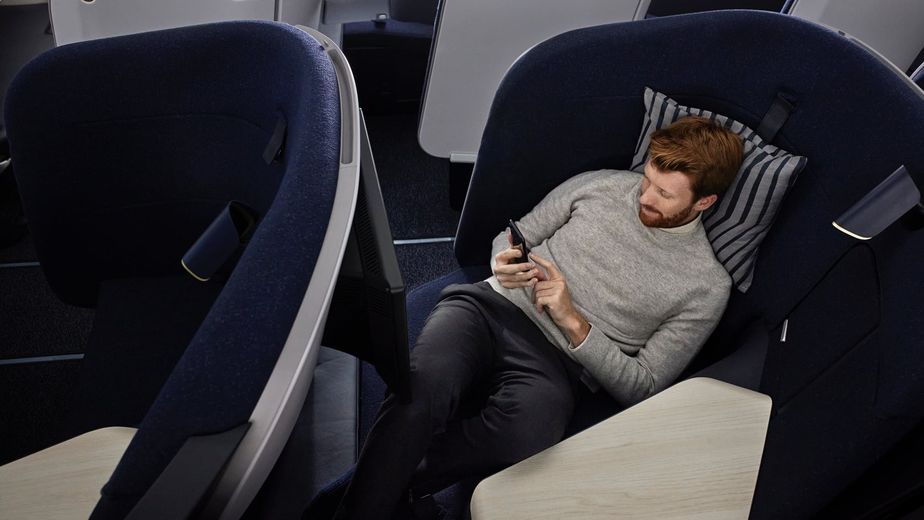
Many Qantas business class travellers jetting between Sydney and Singapore are set for a very different experience over the next few years, with almost half the flights on this busy route being made on a leased Finnair A330 fitted with the airline’s unique non-reclining ‘AirLounge’ seats.
That’ll also apply to all Qantas’ Sydney-Bangkok flights from March 31 2024.
The reason for this switch-up? To combat a shortfall of aircraft that’s bedevilled the entire industry, Qantas is leasing a pair of Finnair A330s in order to free up its own aircraft and crew to boost flying elsewhere.
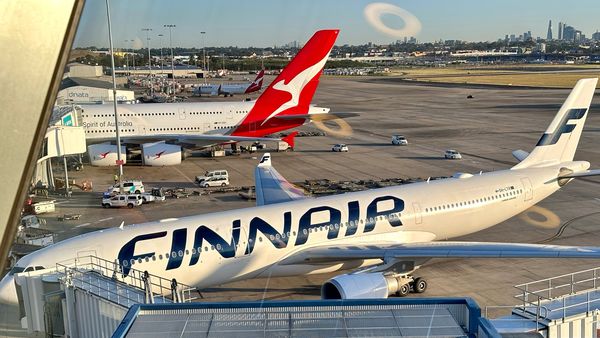
(Finnair itself has less need for these planes as the current Russian-Ukraine conflict means its flight paths must avoid Russian airspace, stretching some routes beyond the A330’s range.)
This lease period stretches as far as 2028, when Qantas will have begun replacing the A330s with a mix of Airbus A350s and Boeing 787s.
Between now and then, that’s a lot of flights to Singapore and Bangkok in these Finnair jets with Finnair business class.
So what can business class travellers expect on these Qantas-Finnair A330s?
I snared up a Sydney-Singapore business class seat at low Classic Flight Reward rates – just 68,400 Qantas Points each way (plus $233 in taxes and surcharges) – to bring you this first-hand report.
My snap summary: this is a seat travellers either love or loathe, with very little middle ground.
Most people who’ve flown in Finnair’s latest business class tend to have very positive reactions, including praise as the best non-doored business class.
But when the pendulum of opinion swings the other way, the shift is into ‘uncomfortable, never fly again’ territory.
If you find yourself in that camp on Qantas’ Sydney-Singapore Finnair A330 flights, at least you can opt for the Qantas A380.
The Qantas-Finnair A330 ‘wet lease'
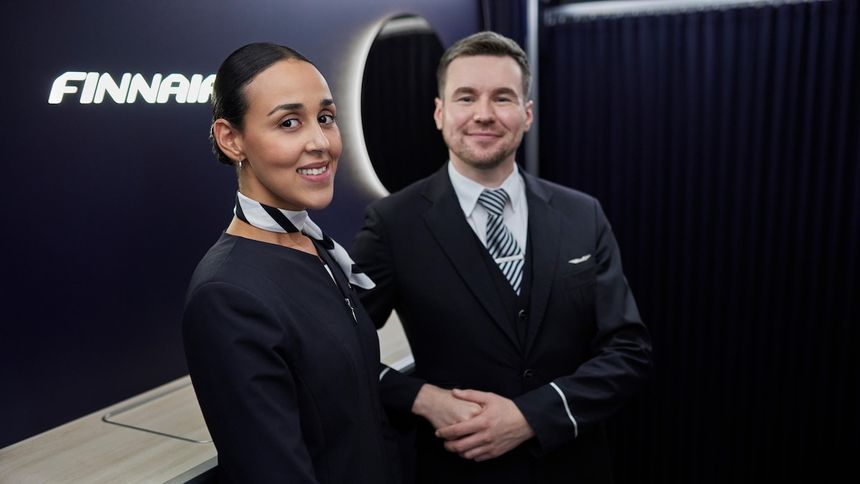
It’s a decidedly odd feeling – walking up to a boarding gate at Sydney Airport holding a Qantas ticket, yet stepping onto a Finnair jet and being welcomed by a Finnair crew.
This Twilight Zone vibe isn’t helped when confronted with Finnair’s AirLounge business class pods instead of the familiar Qantas Business Suite.
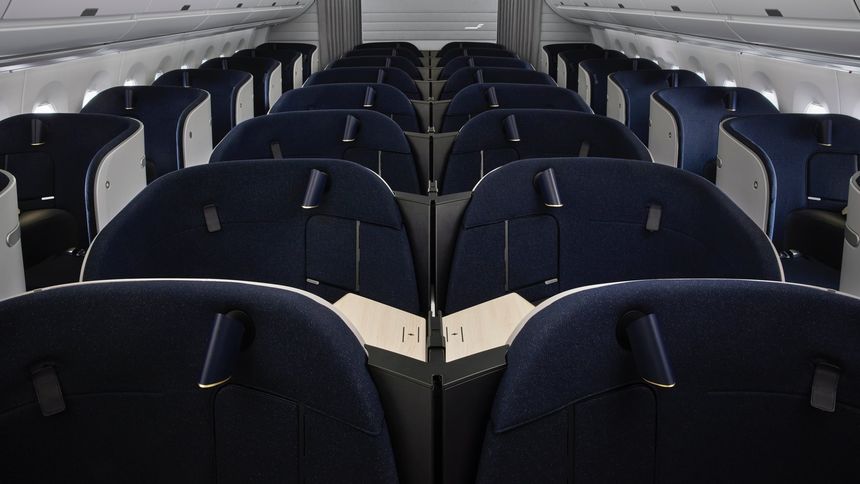
But it’s not really a Finnair flight: the bedding is standard Qantas-issue (alas, none of those delightful Marimekko throws and pillows), as are the amenity kits and catering.
The noise-cancelling headphones are from Qantas, washroom amenities from Finnair, and inflight entertainment is a mix of both – the Qantas content sits behind Finnair’s user interface.
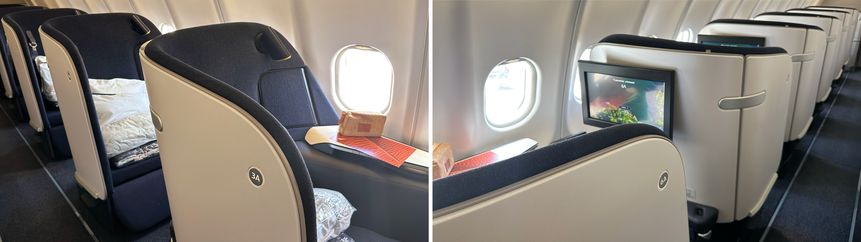
In airline circles this arrangement is termed a ‘wet lease’ and it will run until late 2025, before being converted to a ‘dry lease’ which will see Qantas pilots and cabin crew take over through to late 2028.
Note that there’s no change to earning Qantas Points and status credits on these ‘operated by Finnair’ flights, and you can still book points-based reward seats and use points for upgrades from economy to premium economy or business class.
Finnair’s A330 business class
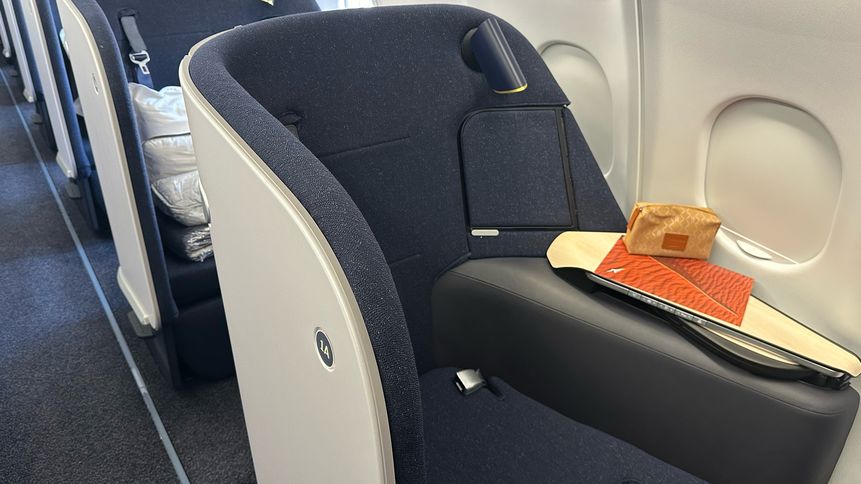
For those who’ve not travelled in Finnair’s latest business class, such as on Airbus A350 flights from Singapore, Bangkok and Hong Kong to Helsinki, this cabin full of 28 oversized ‘sofa’ seats wrapped in high-walled shells invites a double-take.
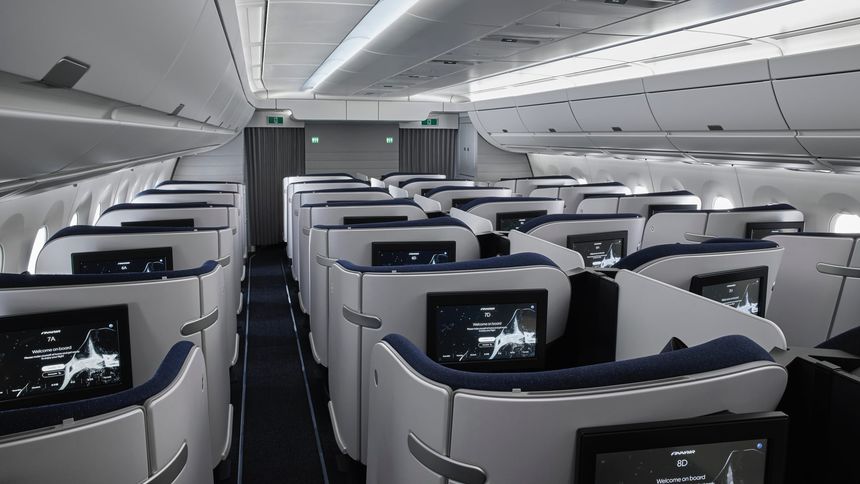
Decked out in Finnair’s dark ‘Nordic blue’, the entire padded inside of this curved shell serves as your seat – and it’s a seat that’s fixed in place.
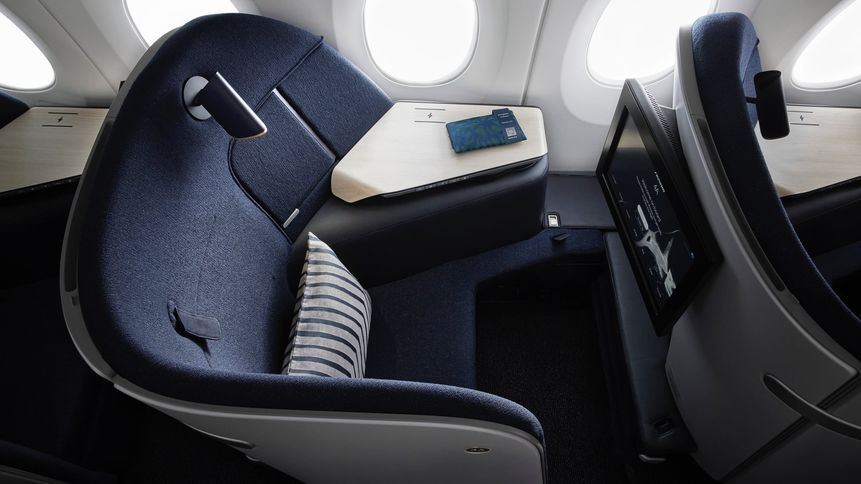
It doesn’t recline into sundeck-style mode, let alone to become a bed. It doesn’t recline at all. Thankfully, this doesn’t mean you have to sit bolt upright for the whole flight.
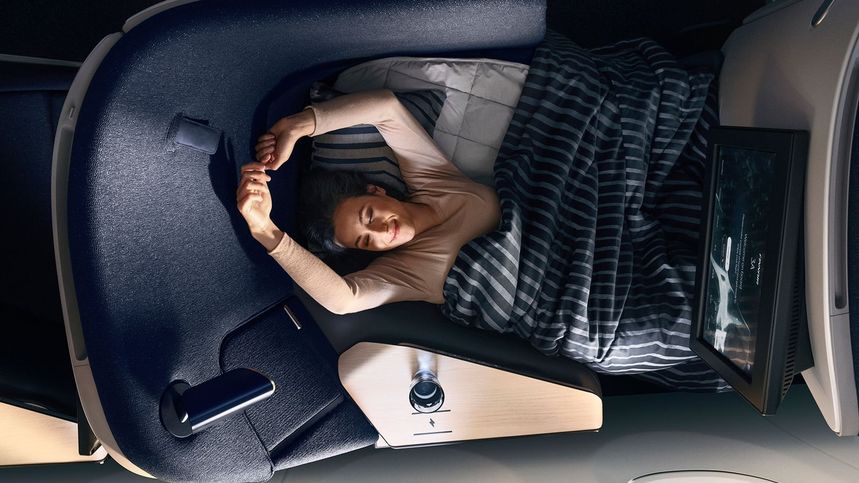
One corner of the AirLounge’s front shell, off to the side of 18” video screen, contains an alcove for your feet.
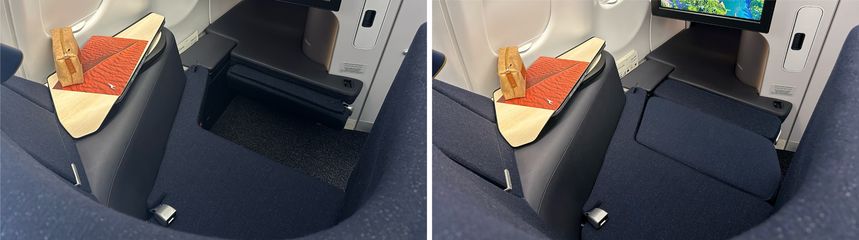
When it’s time to sleep, two padded panels swing up between the seat and ottoman to create a continuous space which becomes your fully-flat bed.
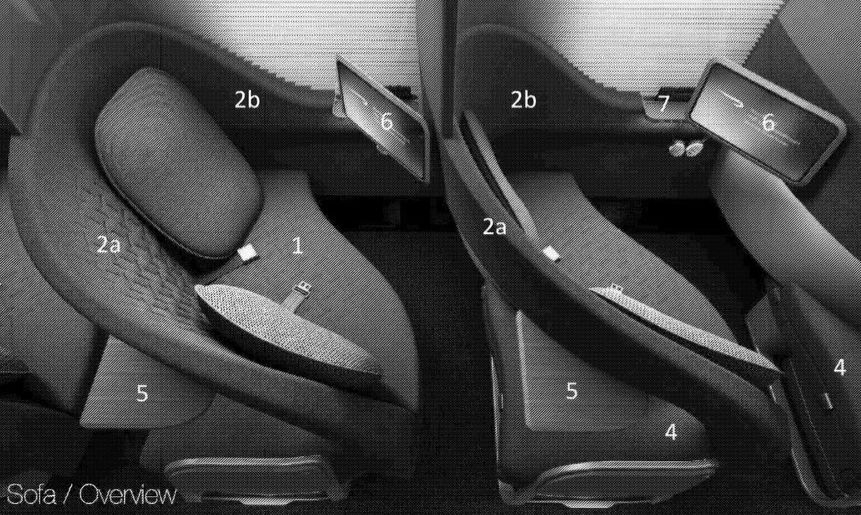
Developed by Finnair, seat-maker Collins Aerospace and the design doyens at Tangerine, from an original design by PriestmanGoode for British Airways in 2014, the AirLounge is like nothing you’ve ever seen – except perhaps for your favourite couch at home.
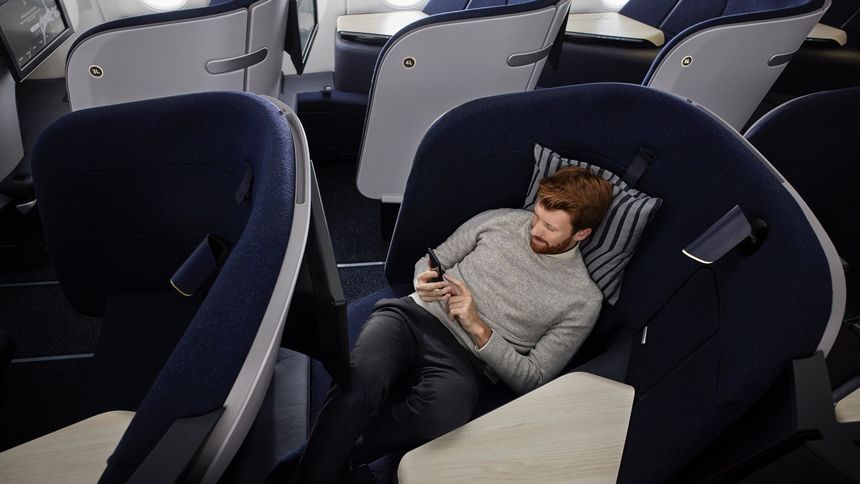
And that’s the thinking behind the AirLounge: if you can comfortably laze on your couch for hours on end, why not bring that concept into the sky as a one-person couch where passengers can sit, sleep or otherwise spread out as they choose?
(Of course it’s not just about the passenger. The AirLounge is a relatively lightweight seating module with almost no moving parts – the swing-up legrest is the sole motor-driven component – so Finnair enjoys increased reliability of the seat and greater fuel efficiency for the plane.)
Ironically, the AirLounge’s fixed-in-place nature requires more effort on the part of the passenger to get comfortable.
Because the seat doesn’t recline, you’re either sitting upright or lying flat – there’s no in-between position unless you create it yourself.
So be prepared to change position, wiggle around and nestle in, lean this way and slouch that way in order to make yourself at home, because the seat won’t do any of that for you.
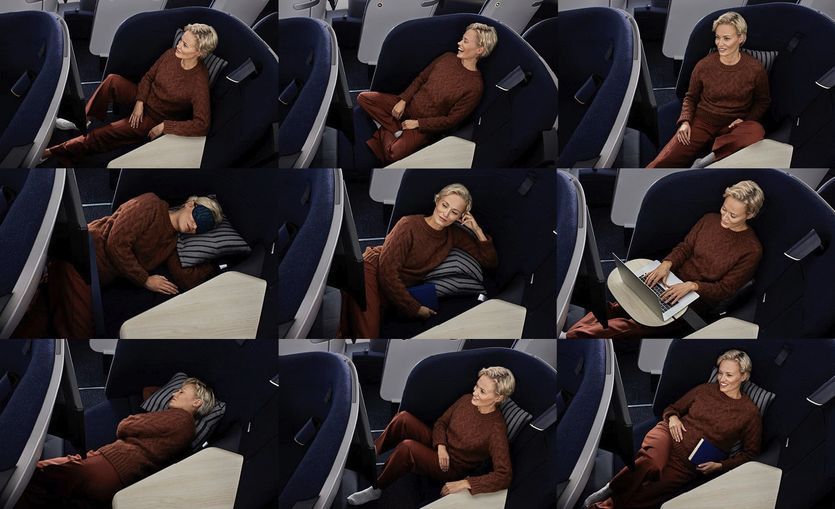
Here are some tips to help you find your own comfort zone in Finnair’s A330 business class.
- Use both of the supplied pillows and try placing them vertically, one above the other, for more back support (unfortunately, as soon as you shift around, so will the pillows) .
- Experiment with the rolled-up mattress pad as a bolster, either behind your back or even positioned next to you to support your arm in this extra-wide seat.
- Put the seat into ‘bed’ mode for extra room to sprawl out, stretchy your legs or even sit cross-legged.
- Nestle yourself into the curved corner of the seat, closest to the aisle, rather than hard up against the flatter portion of the seatback.
- If you have one of those U-shaped pillows that slips around your neck, for when you fly in premium economy or economy, bring it along on the Finnair flight – you might find it’s just the thing for when you’re sitting in the corner with your head against the back of the seat.
- Get used to watching inflight moves or TV shows sitting up – not only does the seat not recline, but the 18” video screen doesn’t pivot down.
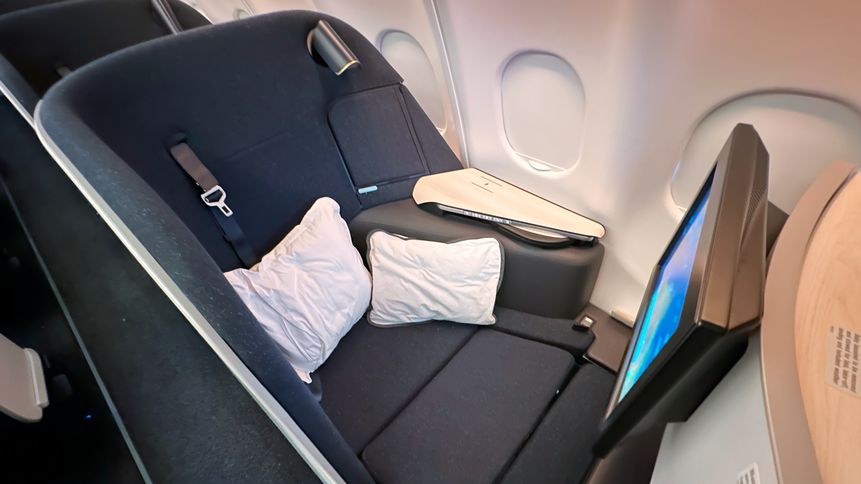
These tips apply equally to all 28 seats in Finnair’s A330 business class cabin, which follows a standard 1-2-1 layout (Finnair labels these seats as A-DH-L).
The paired D and H middle seats see both passengers seated directly next to the aisle, with the shelves of each seat between them.
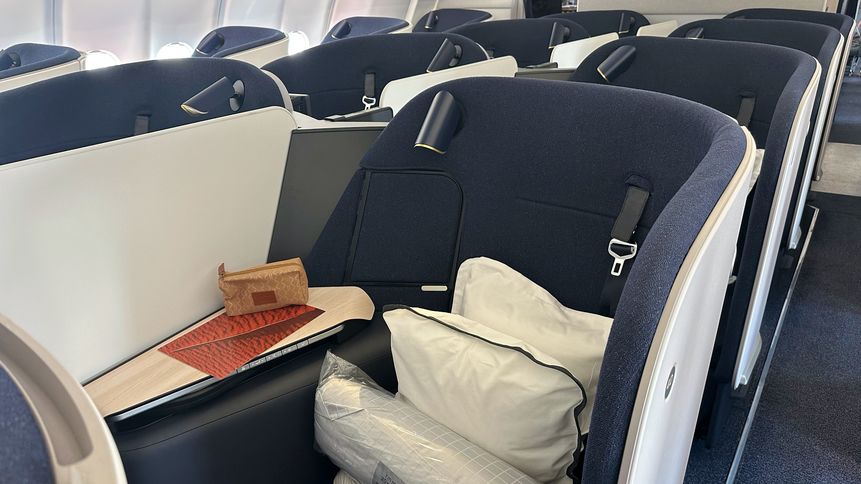
As you’d expect, there’s also a privacy divider which by default is raised, but can be lowered for sociability if you’re flying with a friend or partner.
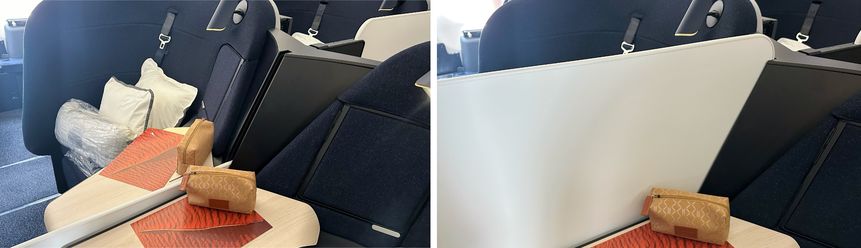
Sleeping in Finnair’s A330 business class
So much for sitting – but how about sleeping in Finnair’s A330 business class?
Two swing-up sections – one from directly beneath the seat and one from just ahead of it – create a long, wide continuous surface for sprawling and snoozing.
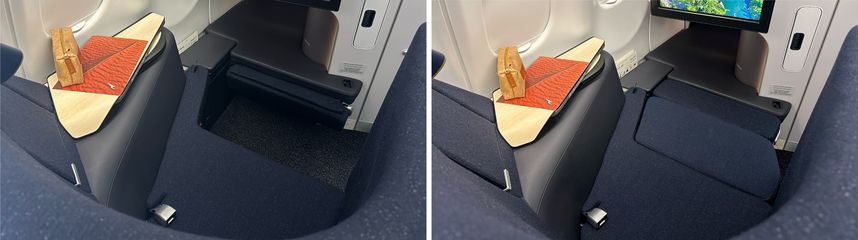
It’s in this mode that you realise how much surface space the seat has – at its widest point the seat measures over one metre, and while the bed is officially just shy of 2 metres it feels even longer.
And yes, when you lie down on this seat your head will be where (ahem) another part of your anatomy has been parked for hours, so that in itself isa good reason to plonk down the mattress.
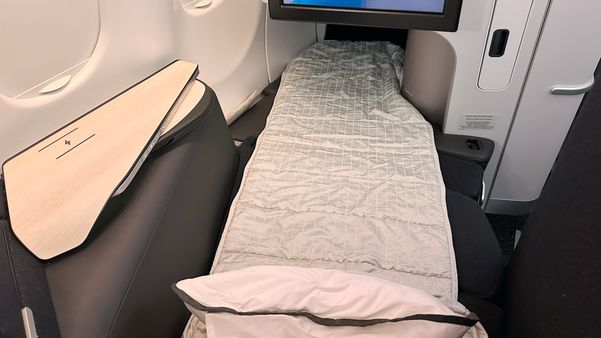
(Qantas has opted to retain its own A330 toppers rather than use the custom-made Finnair ones, and while the QF mattresses are narrower they do the job.)
Then it’s just a matter of sinking down onto the seat with your head on the base of the seat, stretching out as far as you can and extending your feet into the nook in the opposite corner.
That cubby offers more space than conventional seats, with Finnair leaving one side open to the fuselage rather than making it a fully-enclosed box.
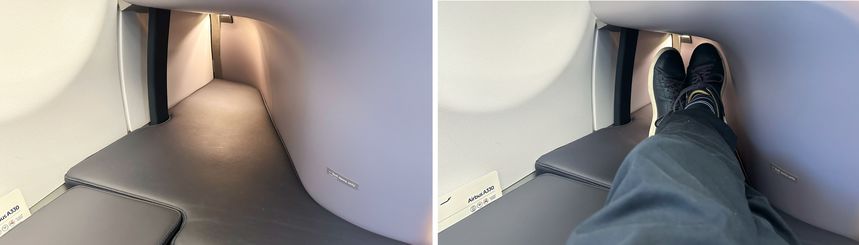
However, it tapers fairly quickly and your foot can annoyingly bump into an exposed metal support rod which is part of the seating module’s framework. This limits your movement and can cause an abrupt awakening if your feet accidentally hit the rod.
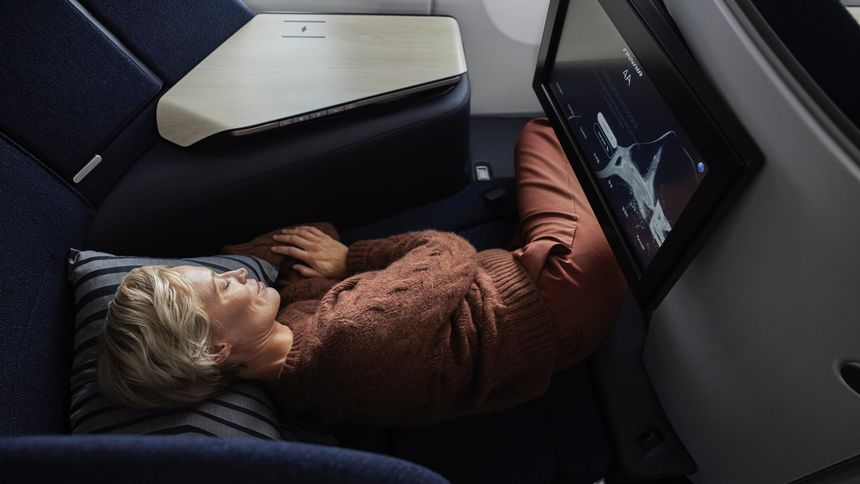
Due to the position of the seat and footspace, you’ll be lying on an angle rather than straight, and any passenger over average height will probably need to sleep on their side facing towards the window, with their knees drawn up and bent a little.
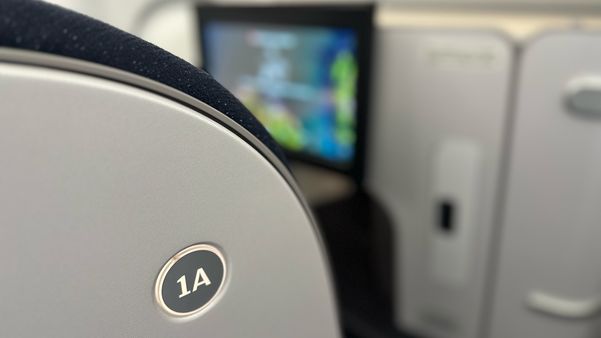
As is usually the case, seats at the very front of the cabin – row 1, in Finnair’s A330 – are the prize pick.
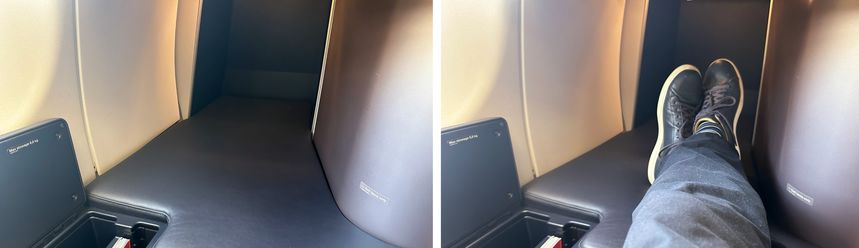
There’s not only greater distance between the seat and the bulkhead wall, but the foot nook is substantially larger in every dimension, and without a metal support rod in the way.
If you can’t nab one of the four seats in row 1 in the initial seat selection stage of your booking, watch for them to possibly open up when it’s time for online check-in.
Other features of Finnair’s A330 business class
It’s difficult not to admire the design of this seat, which channels the broad Scandi principles of simplicity, functionality and comfort; there’s no ornamentation or pretence, and definitely no bling.
You’ll feel wrapped in this cosy cocoon-like space, and it’s a surprisingly private environment thanks to the height and wrap-around design of the seat’s curved shell.
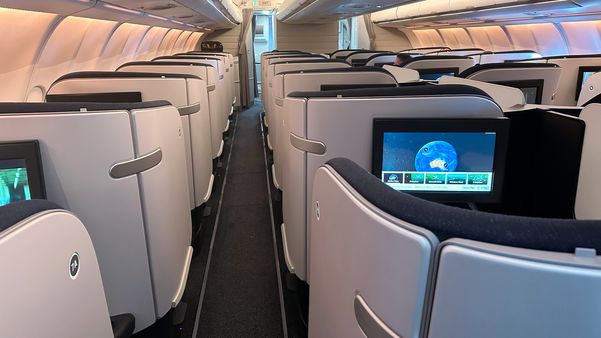
But Finnair’s AirLounge is definitely short on storage space compared to the Qantas Business Suite of both the Sydney-Singapore A330 and A380.
A small compartment seamlessly built into the seat just below the reading lamp offers little room for more than the IFE controller and supplied noise-cancelling headphones (which are never as good as your own ones).
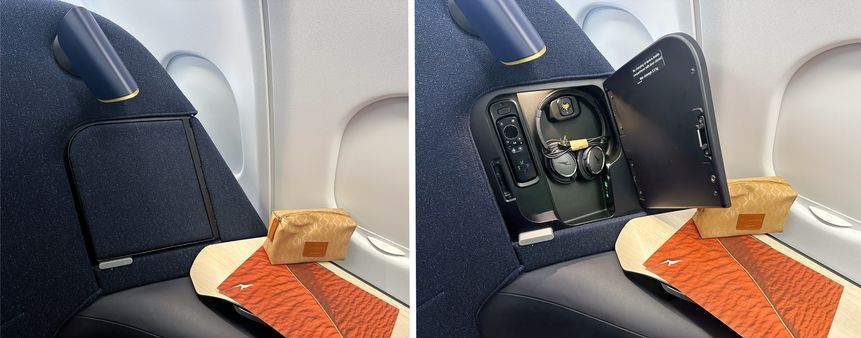
There’s a second floor-rmounted compartment containing your water bottle and might fit a small tablet or e-book reader.
That said, Finnair’s business class seat ticks a few of the tech boxes: the shoulder-height compartment contains USB-A and USB-C power outlets, while a universal AC socket and second USB-A port are tucked away by the front of the seat (but out of the way of the legrest).
The bench has inbuilt wireless charging, with raised rubber guides to both help position your phone and keep it in place, and the laptop-friendly table which swings out from beneath the console (and is dressed in the same soft birch finish) can be nudged around so you can get up from the seat without having to first stow everything away.
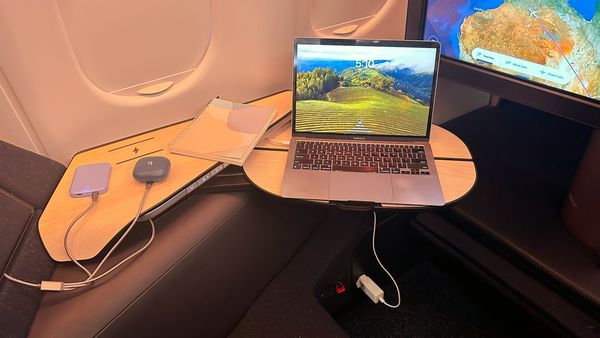
And there are two must-see ‘channels’ on the IFE system showing a live view below and ahead of the plane, which are quite enjoyable during take-off and landing.
Unfortunately, the WiFi system on Finnair’s A330s – which use the same Panasonic Ku-band satellites as Singapore Airlines and Emirates, among others – has been disabled for these Qantas flights.
Other notes from the Qantas Finnair A330 flight
The enthusiastic Finnair crew on these flights are all Singapore-based, and welcomed the opportunity to be making trips and overnight stays in Sydney instead of Helsinki.
And my Sydney-Singapore trip featured one of the better Neil Perry menus I’ve had on a Qantas flight to Asia.
Lunch was served about an hour after take-off, and yes, the ‘aperitivo’ of a margarita and a solitary mozzarella & pine nut pesto arancini ball looked quite lonely...
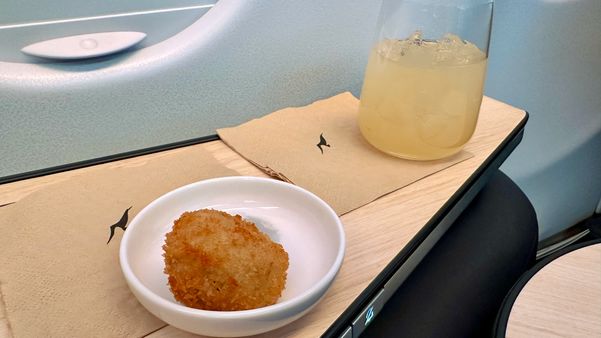
... but it was followed up by a solid choice of starters:
- carrot and thyme soup (I generally avoid soups inflight, worried about splattering drops and serious spillage onto my clothes from a sudden bout of turbulence)
- salmon crudo salad (this was my pick, and it proved delicious )
- Bannockburn chicken skewers (to which fellow travellers gave the thumbs up)
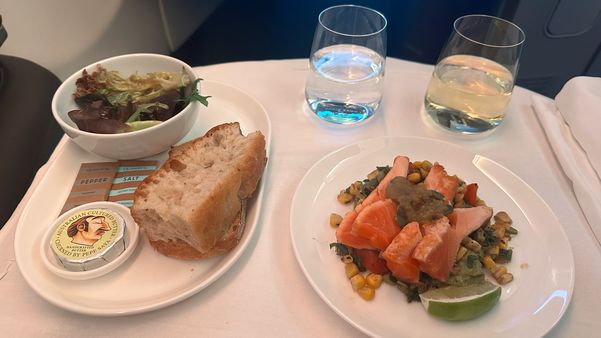
The mains also hit the spot, with a selection of
- seared snapper with shiitake mushrooms, bamboo shoots and jasmine rice
- Barrington Hinterland beer fillet with roasted potatoes, braised cabbage and mushroom butter
- ‘hot and numbing’ Barrowdale pork stir fry (my choice, thankfully it was only modestly hot and not tongue-tingling)
- a plant-based dining option of roast cauliflower with pearl couscous, zucchini and an almond and tahini dressing
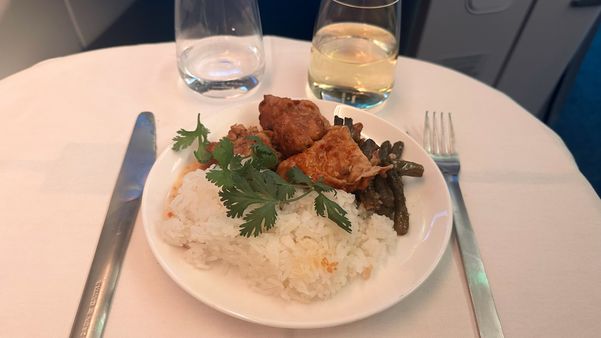
To finish up, business class passengers could choose between a cheese platter, a mango mouse with condensed milk Chantilly, ice cream and fruit.
A light meal was offered 90 minutes prior to the scheduled 6pm landing at Singapore’s Changi Airport. Given the timing, this is less of a replacement for dinner than something to keep the tummy rumbles at bay.
In business class we were offered a spinach and feta filo pie, or Vietnamese-style lemongrass beef brisket noodles.
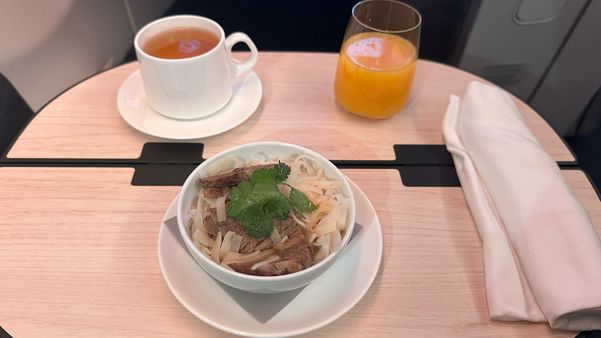
The Finnair A330’s galley contained the usual selection of mid-flight snacks such as biscuits, chips and chocolate, and the Champagne served is either Duval-Leroy Brut or Jacquart Brut Mosaique, depending on the which is loaded.
Roo meets reindeer: flying the Qantas Finnair A330
The Finnair A330 will largely replace Qantas’ own A330 flights QF81/QF82 on the Sydney-Singapore route, while supplementing the flagship Airbus A380 to London.
These Finnair A330 flights will carry their own unique flight number: watch for QF291 from Sydney to Singapore, and QF292 from Singapore back to Sydney.
At the time of writing, the Finnair jets are flying Sydney-Singapore on Monday through Friday, with the red-tailed A330s more likely to appear on the weekend.
A second leased Finnair A330 will be swung onto the Sydney-Bangkok route beginning March 31 2024, where the daily QF23/QF24 Qantas A330 flights will be replaced by the Finnair A330s under flight numbers QF295/QF296.
This will also mean that Qantas will offer premium economy between Sydney and Bangkok – something that’s missing from the red-tailed A330s – in the form of Finnair’s own premium economy recliner.