
Review: Japan's Shinkansen 'Green Car' first class: Hiroshima-Osaka
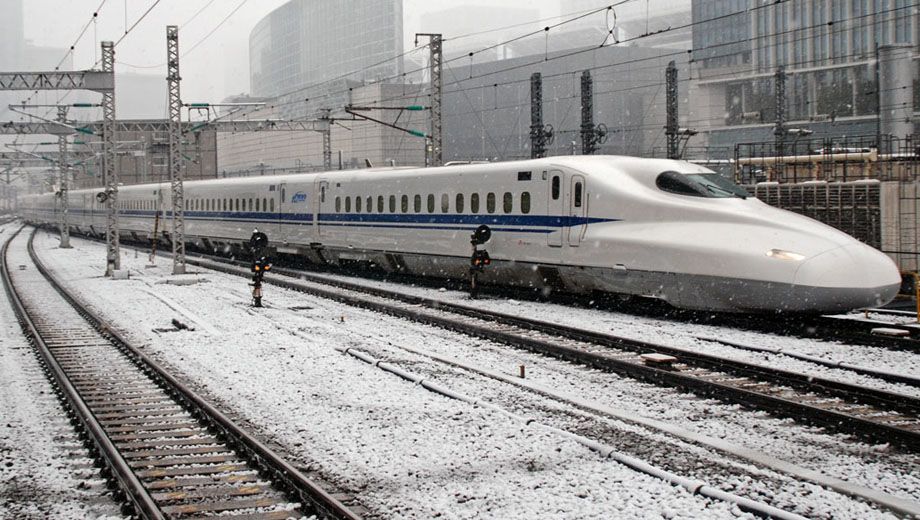
Zooming along at up to 300km/h but without the hassle of airport security and excess baggage charges, Japan's high-speed Shinkansen trains are a great way to commute between the country's major cities such as Tokyo, Osaka, Kyoto and Nagoya.
Business travellers will feel most at home in the 'Green Cars' – the first class of the Shinkansen – which Australian Business Traveller tested on a recent Nozomi, Tokaido-line service from Hiroshima to Shin-Osaka.
Shinkansen: finding your car
Much like on an aircraft, seats in the Shinkansen's Green Cars are all assigned – and with English-speaking staff at the ticketing counters, choosing a spot was an easy task.
Your ticket will show a train number, a departure time, the car number you'll be travelling in, and finally, your seat number in that particular car.
We're after the high-speed Nozomi 126 service, which is clearly displayed on the sign at Platform 13:
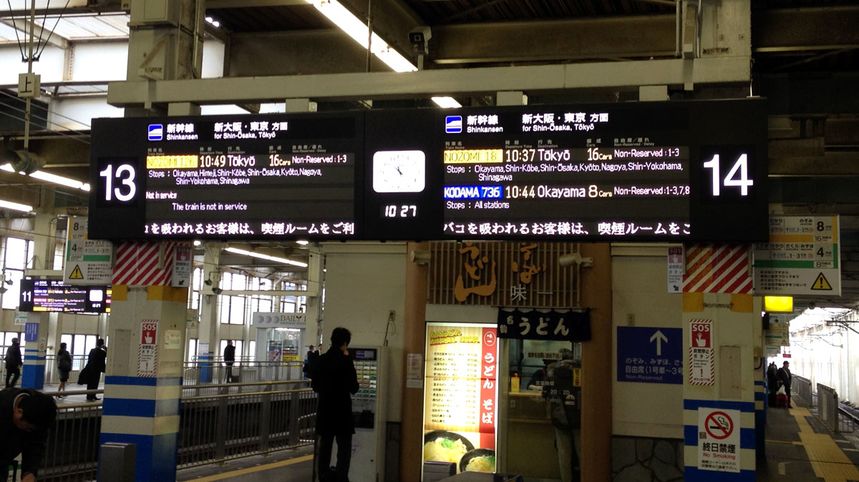
Once you're on the correct platform, follow the clear signage to locate your car. With a Green Car ticket, you'll be looking for either car eight, nine or ten – all of which are conveniently located in the centre of the platform.
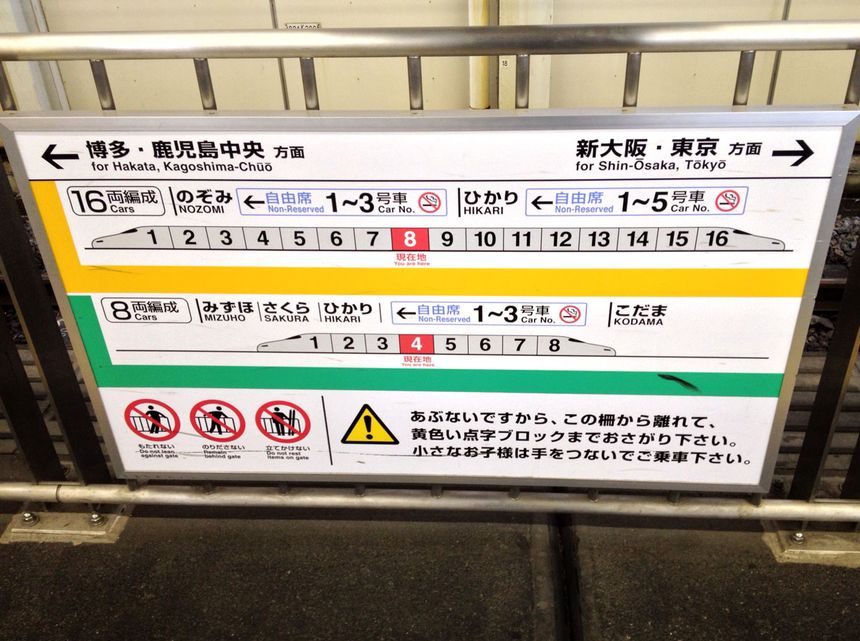
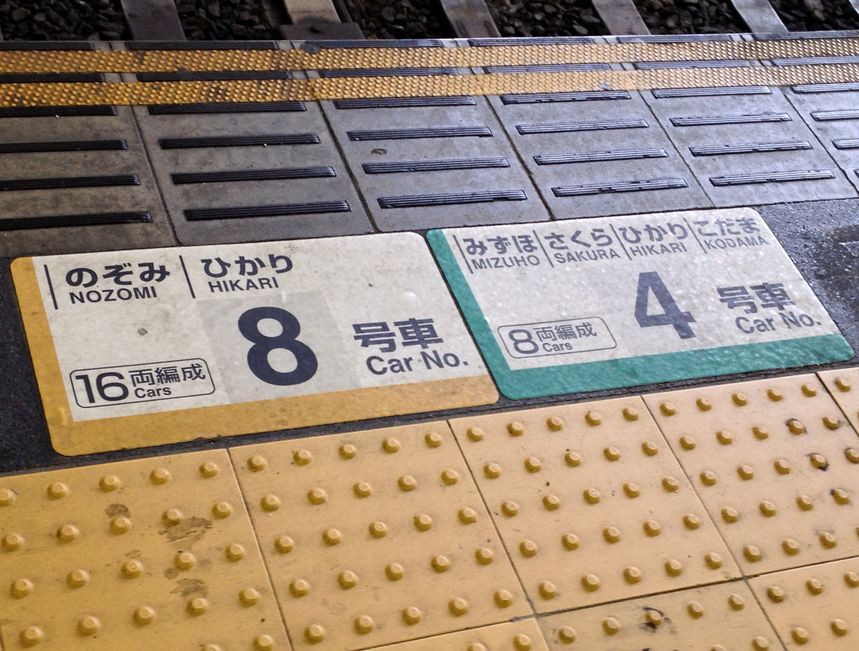
You can then double-check that you're in the right place by looking at the floor signage...
... and then finally as the train arrives, with the service number and destination displayed on the LCD screen, and the car number and Green Car logo spotted adjacent to the door.
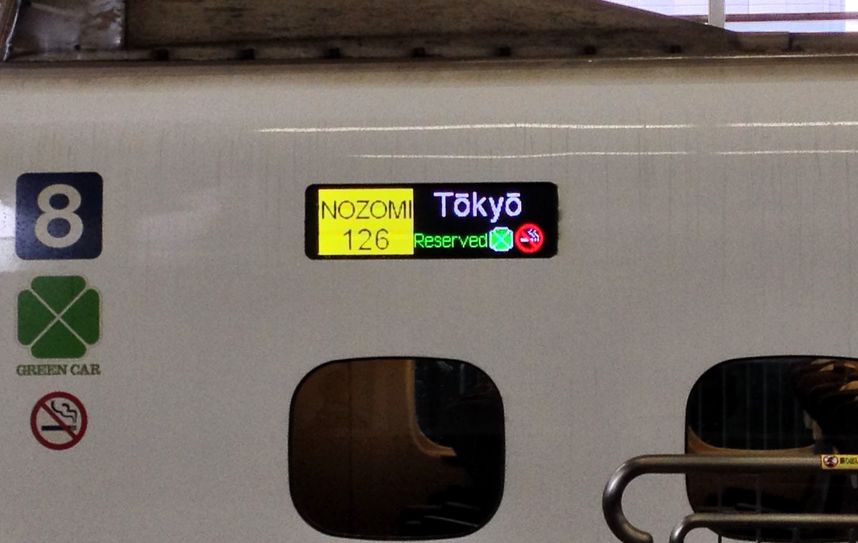
Even though you're catching a domestic train service in a country where English isn't the first language, you won't need to speak a word of Japanese to navigate the Shinkansen.
Shinkansen: Green Car seats
Now that you're on the right train and in the correct car, just follow the signs to find your seat and feel free to hang your jacket or coat.
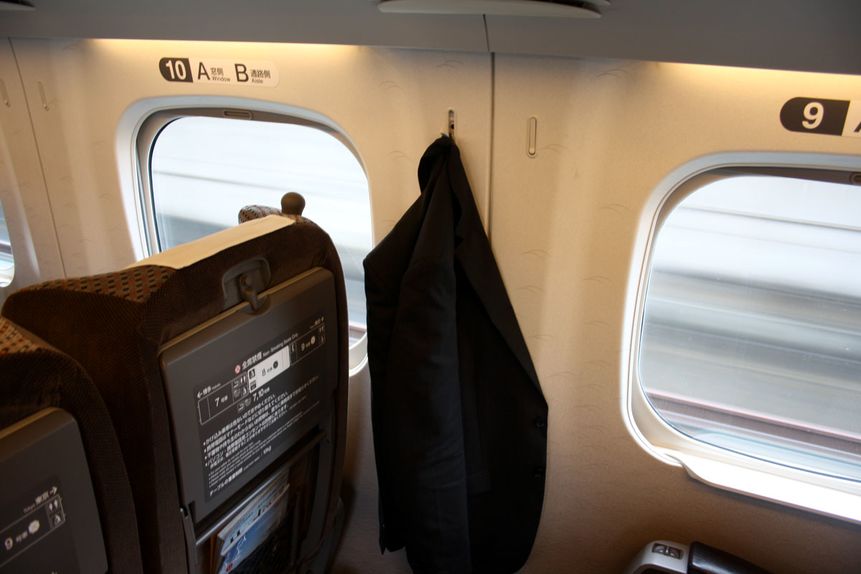
Rather than the 2-3 layout found in the regular cars, seats in the Green Cars come in pairs of two – ditching the middle seat to give each passenger a little extra space:
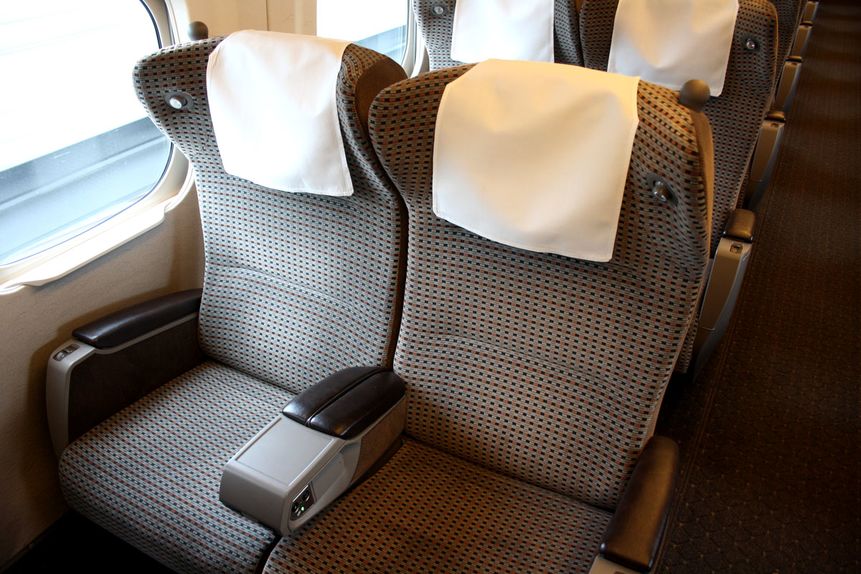
Very much the 'first class' of Japanese railway, each seat comes with a seat warmer, a reading light...
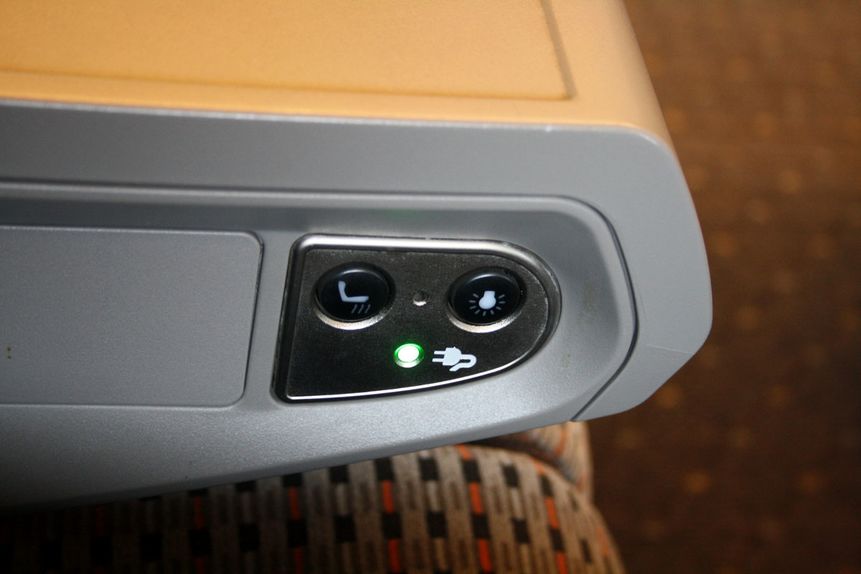
... its own AC power outlet hidden in the arm rest... 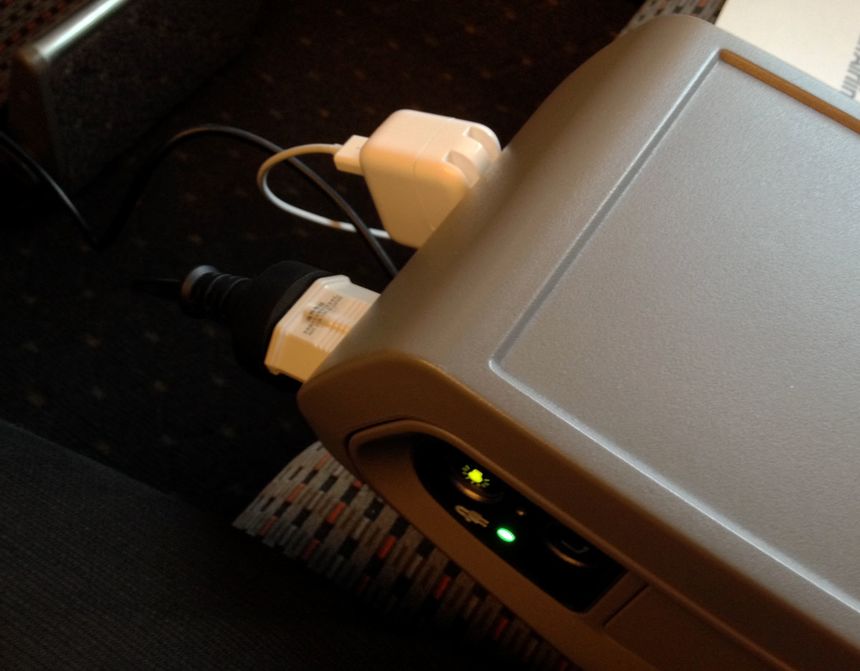
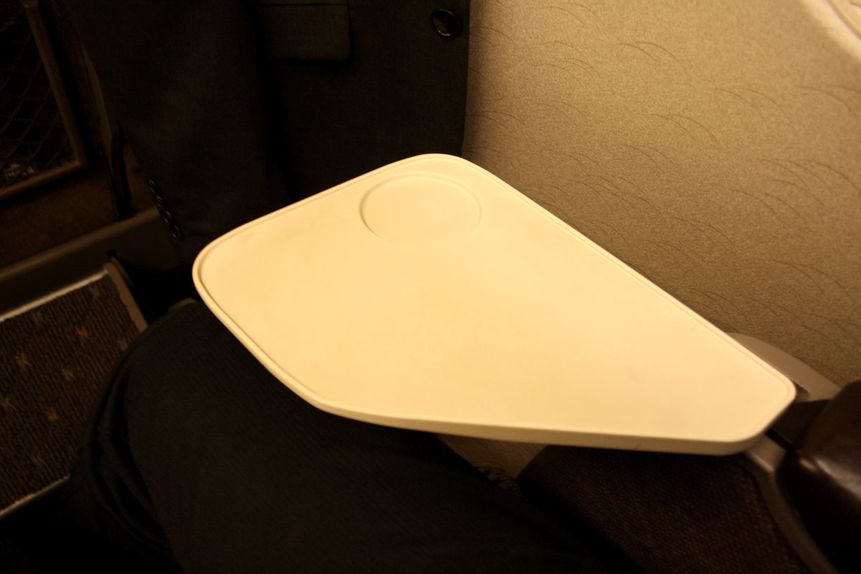
... a fold-out beverage table...
... and an adjustable foot rest:
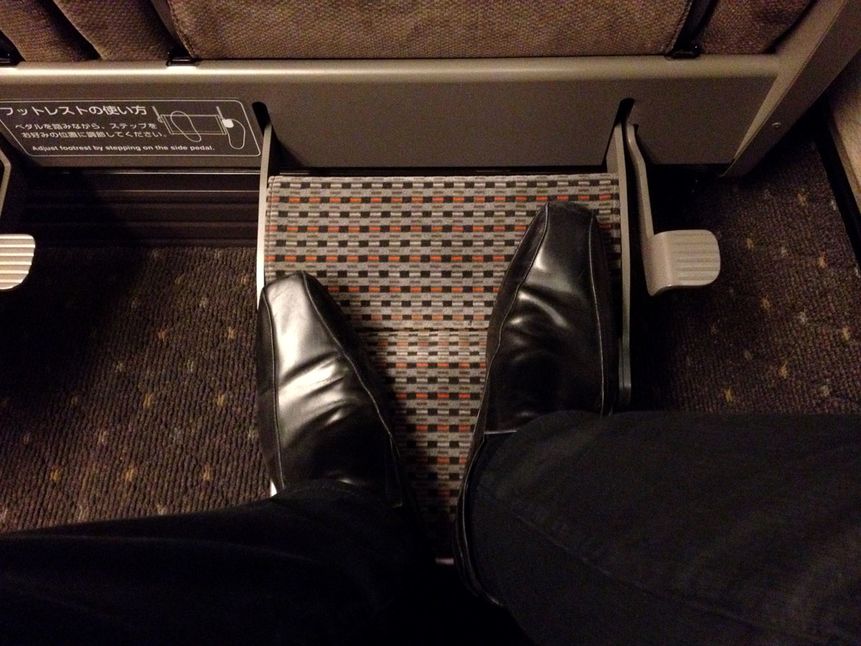
It's great for shorter passengers, although taller travellers may lament that the foot rest doesn't retract – restricting your available space.
There's also a fold-down meal-size tray table in every seat...
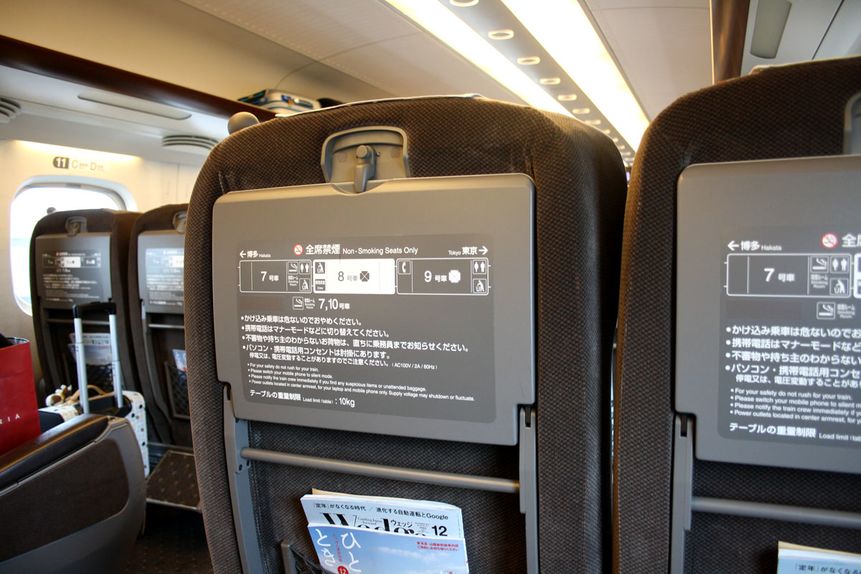
... which was sturdy enough to support this author's 3kg laptop.
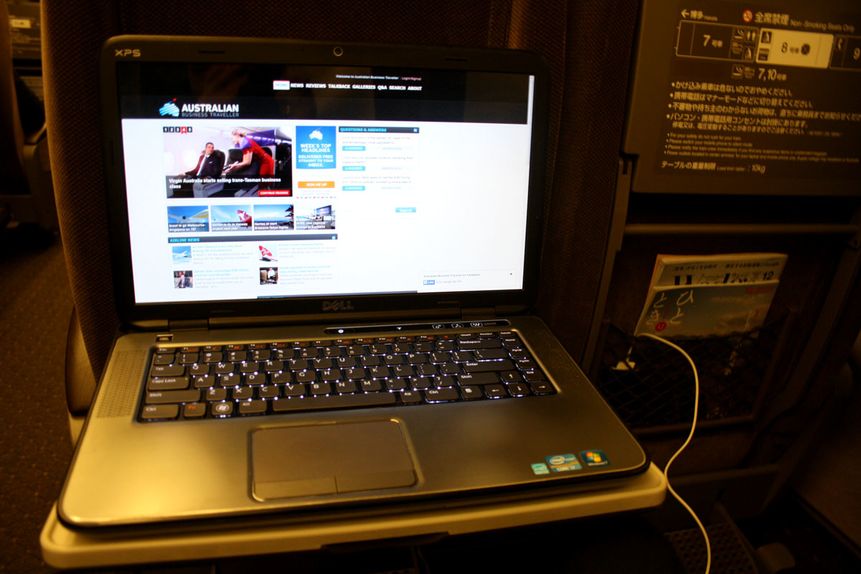
Regrettably, there's no wireless Internet access available aboard the train. To remain connected you'll need to tether your laptop to your mobile phone or a portable 3G/4G hotspot, although dropouts are frequent when zipping through tunnels.
Cabin-sized bags can be stored on the shelves above the seats, while larger suitcases can be placed at either end of the carriage.
If possible, we'd recommend placing your bag at the front of the cabin rather than at the rear, as you'll be able to keep an eye on the area as the train is approaching each station.
Shinkansen: meals and snacks
Despite holding a ticket for the premium travel class, Green Car seats don't come with any inclusive food or beverage.
Instead, you'll receive a moist towelette shortly after taking your seat – and on this service, vouchers for ¥50 (A$0.53) off ice cream purchases were also distributed.
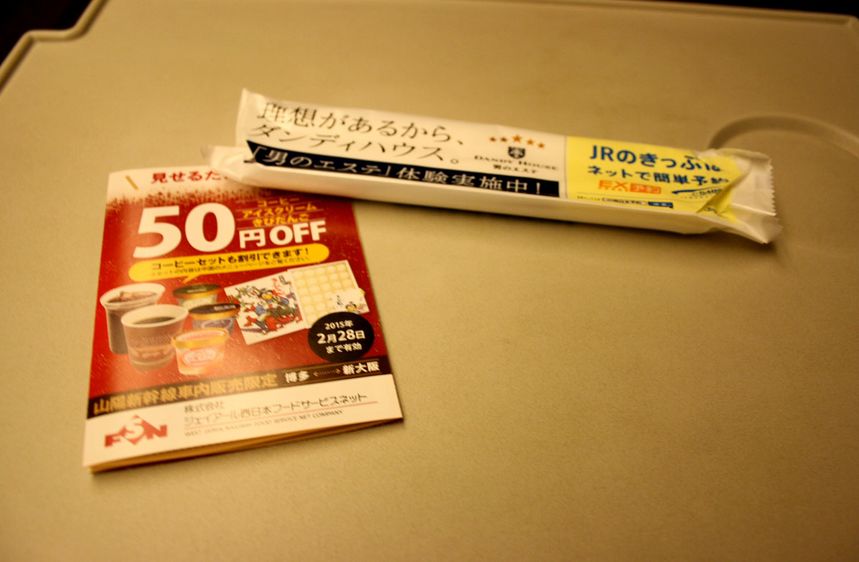
It was put to good use, with the total price just ¥410 (A$4.37) for both an ice cream and a refreshment from the Harry Potter-esque trolley.
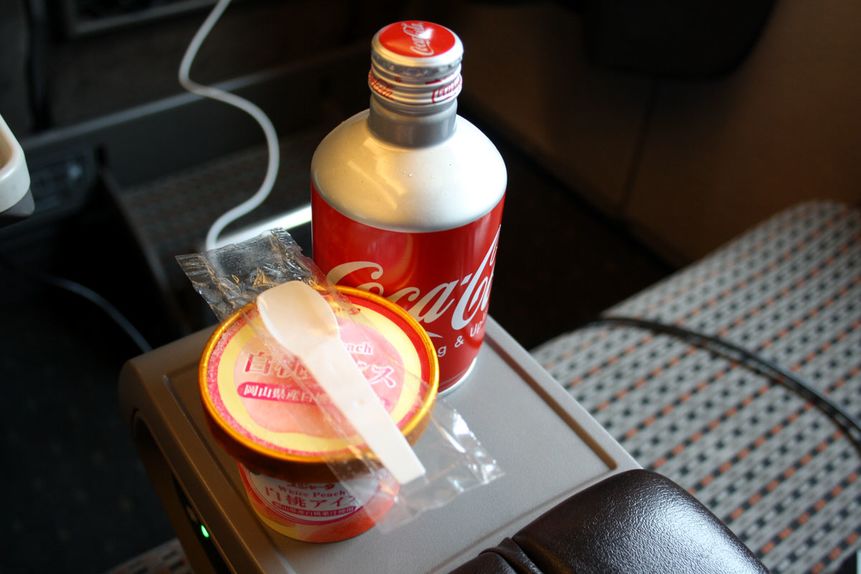
Payment can be made in cash (Japanese Yen) or by using your Suica or Pasmo travel card, although you'll mainly find snacks, drinks and simple foods such as packet sandwiches rather than anything that passes for a full 'meal'.
Given that train passengers are in a captive marketplace, that's quite a reasonable asking price – especially when I've spotted Australian convenience stores charging more than that for a Coke on its lonesome.
Summary
Travelling on the Shinkansen avoids the rigmarole that is air travel such as having to arrive early to check-in baggage, wading your way through security screening and then waiting in a long line of people before finally reaching your seat.
You simply buy a ticket and choose your seat as you would with an airline, and then wait on the correct platform and step on board with no reasonable restrictions on baggage weights and sizes – if you can carry and lift it yourself, you'll generally be fine.
The trains also stop in the city with easy access to connecting train and subway services if you're a little further out, rather than having to fly into an airport, wait for your luggage, cart it onto your airport transfer and then spend another 30-60 minutes reaching your hotel from there.
Sure, there's no pre-departure lounge to enjoy or frequent flyer points to collect, but with trains running so frequently I daresay you won't need a lounge as you'll be off in a matter of minutes.
With tickets in the Green Cars only A$45 more than a regular seat on this particular route, travelling in comfort, peace and quiet is easily worth the slightly higher ticket price, and is still comparable to what you'd pay to fly from A to B.
Follow Australian Business Traveller on Twitter: we're @AusBT