
Qantas' "new spirit": what you'll actually see on flights to the UK
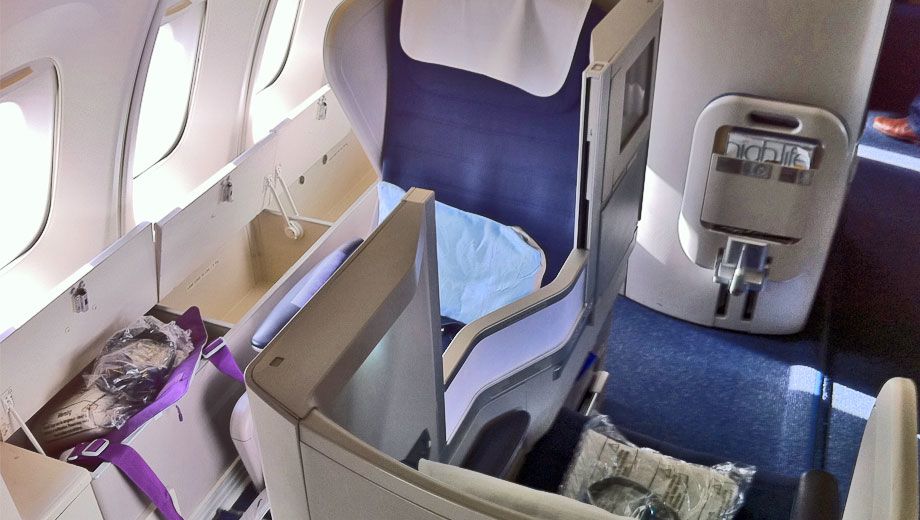
London-bound passengers will see the greatest changes under Qantas' "new spirit" strategy -- if they choose a route that connects in Bangkok and Hong Kong, they'll be on British Airways, not Qantas, for the Britain-bound leg of the flight.
However, flights transiting in Singapore will also see changes -- greater frequency of A380 aircraft, and for the rest, Airbus A380-style fully flat Skybeds installed on Qantas' Boeing 747-400 aircraft too.
We've sifted through the information to explain exactly what changes you'll see on your next business trip, with a particular focus on business travellers and business class.
What's changing?
Essentially, from "early 2012", the airlines are splitting the two-leg flights on the Australia-Bangkok-London and Australia-Hong Kong-London routes. Qantas will fly to those cities, while BA will fly onwards to London.
Sydney-Singapore-London and Melbourne-Singapore-London flights on Qantas will continue. British Airways will also continue its Sydney-Singapore-London flight, once daily.
So what does that mean if you're connecting via Hong Kong or Bangkok?
In business class, you'll be moving from Qantas' fully flat second-generation Skybed in a 2-3-2 forward-facing configuration onto British Airways' fully flat Club World bed in a 2-4-2 forward-and-back staggered layout.
"Strengthening our relationship with British Airways is an important element of our new strategy for Qantas International," said Qantas CEO Alan Joyce. "Singapore will become the focal point of the JSA relationship, with daily Qantas A380 services from Melbourne and Sydney and onward to London, increased British Airways capacity and a new premium lounge."
The joint venture between BA and Qantas on London-Australia flights started in 1995, predating the oneworld alliance (of which both airlines were founding members) by four years.
Route changes from early 2012
Qantas will:
- drop Bangkok-London and Hong Kong-London flights
- continue to fly Australia-Bangkok and Australia-Hong Kong
- maintain one daily A380 flight from each of Sydney and Melbourne to London via Singapore
Qantas promises that "customers will still be able to connect swiftly and efficiently through both cities".
British Airways will:
- continue to fly Bangkok-London and Hong Kong-London
- upgrade its daily Sydney-Singapore-London flights from the Boeing 777 we reviewed to a larger (and more popular with business travellers) 747
- add three more weekly Hong Kong-London return flights, up to a total of 17 per week, which means two flights every day, and an extra flight on three days of the week
New first class lounges in Singapore and Hong Kong will also feature the stunning Marc Newson design, along the same lines as the existing excellent Qantas lounges in Sydney. (An upgrade to the frankly inadequate lounge in Singapore can't come fast enough.)
More seats on British Airways flights from Sydney
Depending on the planes that BA uses on the route, there may not be that much of a business class capacity hike. The Boeing 777-200ER currently on the flight has 48 seats.
British Airways has two 747 configurations that it can use on the flights, with 20 seats upstairs and either 32 or 50 seats downstairs, depending on layout. So the "increased British Airways capacity" may just be four more seats in business class.
Top tip when travelling on BA's 747-400 aircraft: pick seats upstairs, rows 60-64 if you can. The 2-2 seat layout on the upper deck is quieter, has a greater proportion of bulkheads and exit rows (so window passengers don't have to clamber over the aisle seat to get out) and no middle seats.
For more on picking the best seats on British Airways, check out our guides to the best seats on BA's Boeing 747-400 and Boeing 777-200ER on Australian routes and its European route mainstay, the Airbus A320.