
If you’re visiting New York, this Concorde tour is a must-do
Join Executive Traveller on this ‘access all areas’ tour of the famous Concorde.
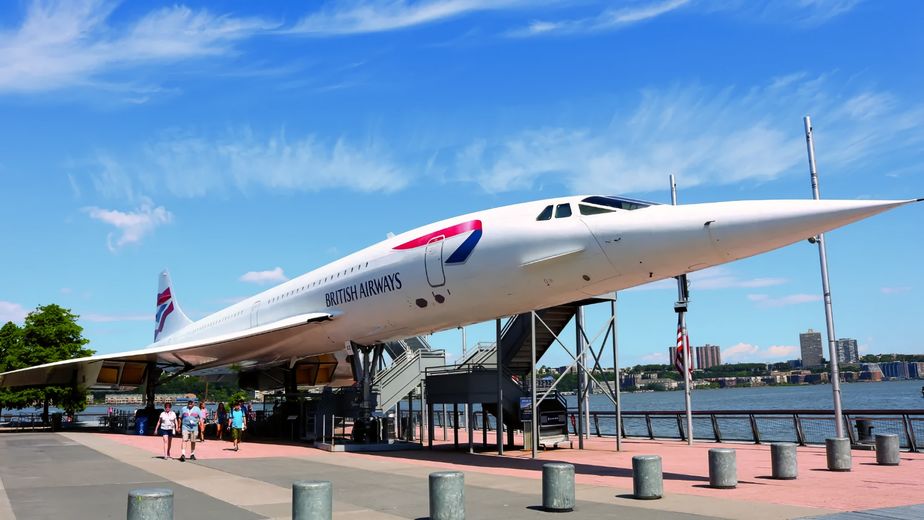
There are so many reasons to visit New York, with a dizzying array of sights to see and experiences to enjoy.
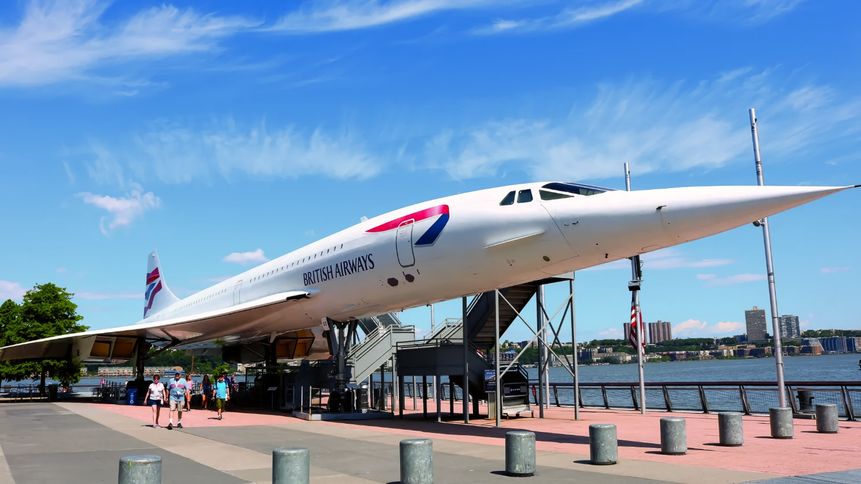
And for readers of Executive Traveller, a must-do would be visiting the Concorde at the Intrepid Sea, Air & Space Museum, on the west side of Manhattan and overlooking the Hudson River to New Jersey.
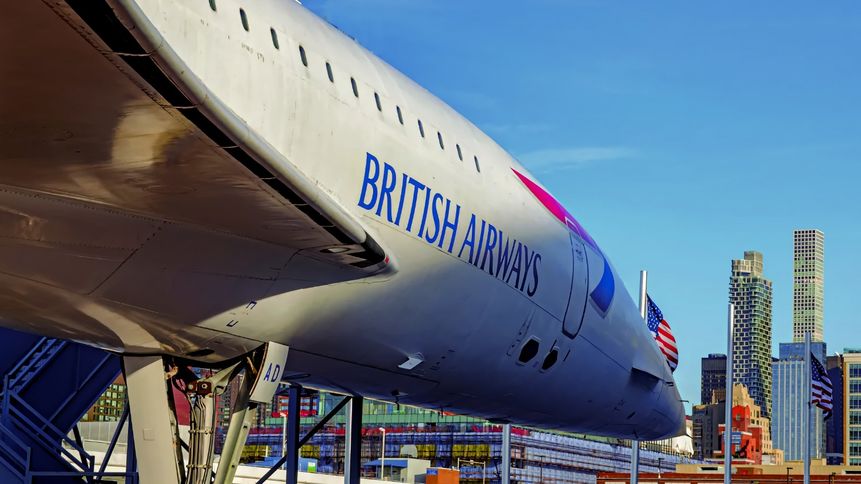
It’s not just about getting up close to this majestic marvel of engineering, which once soared between New York and London in barely three hours.
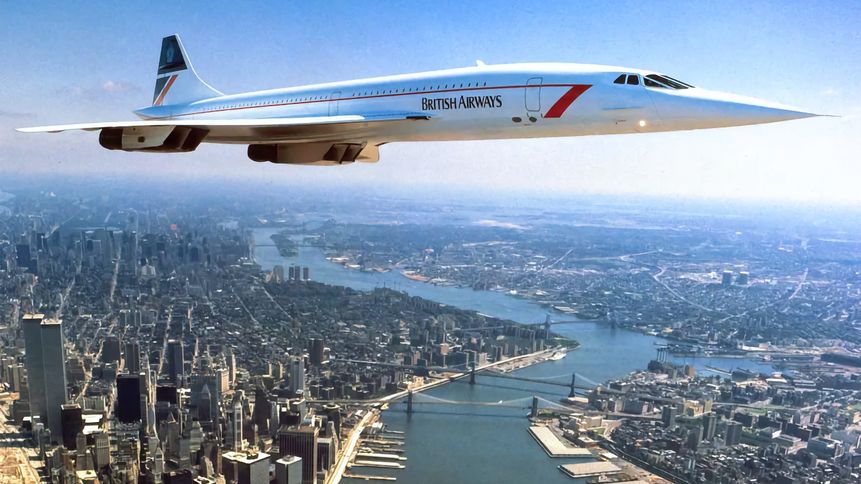
The Intrepid Museum’s Concorde Tour lets you tour inside the supersonic jet.
You’ll learn more about the technological innovations which made this extraordinary aircraft a part of history, and even briefly imagine what it would have been like as part of that elite jet set.
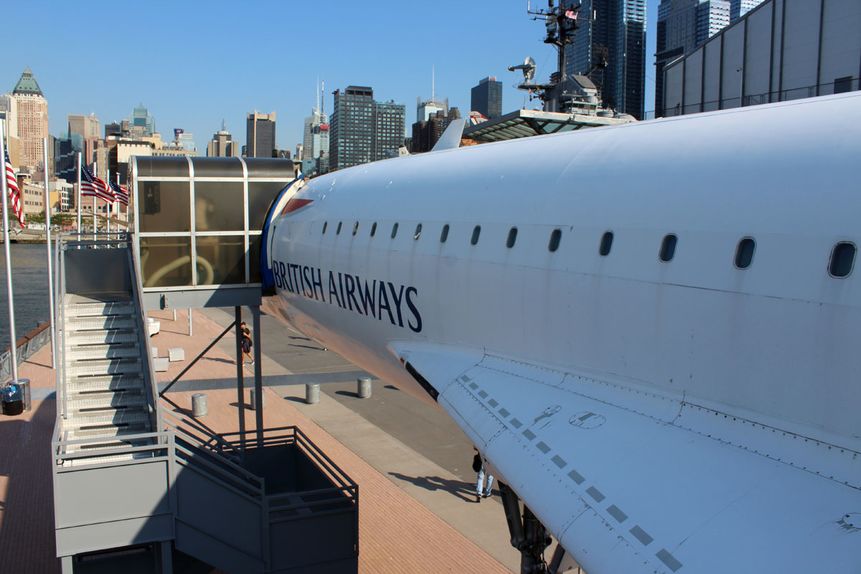
After all, for almost three decades from the mid-70s to 2003, the Concorde was the only way to fly.
And this particular Concorde – the British Airways speedbird known as Alpha Delta (after the final two letters of the aircraft’s G-BOAD registration) is positively draped in history.
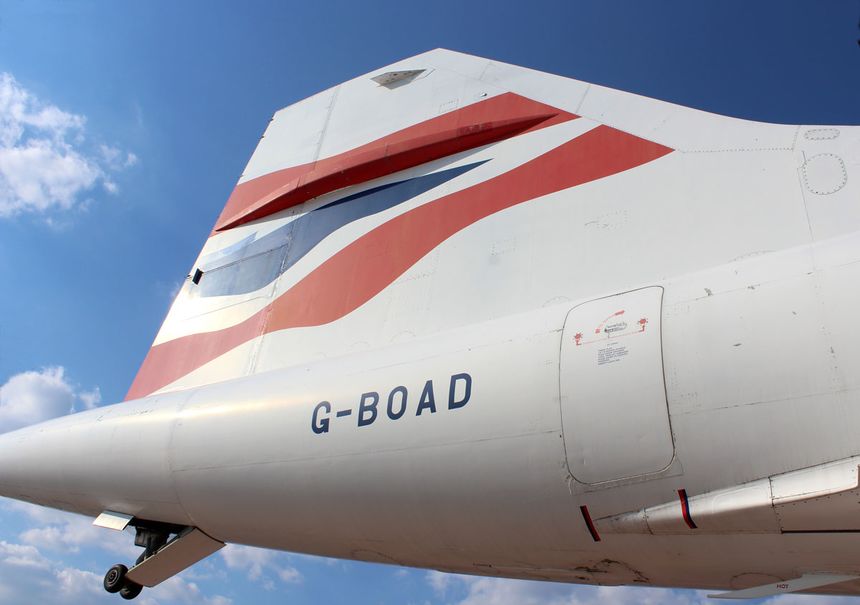
One of only 14 Concordes ever in commercial service, she holds the record for the fastest Atlantic crossing.
That feat was accomplished in 1996 from New York’s JFK Airport to London Heathrow in a blistering 2 hours, 52 minutes and 59 seconds.
That same journey today? Allow around 7 hours.
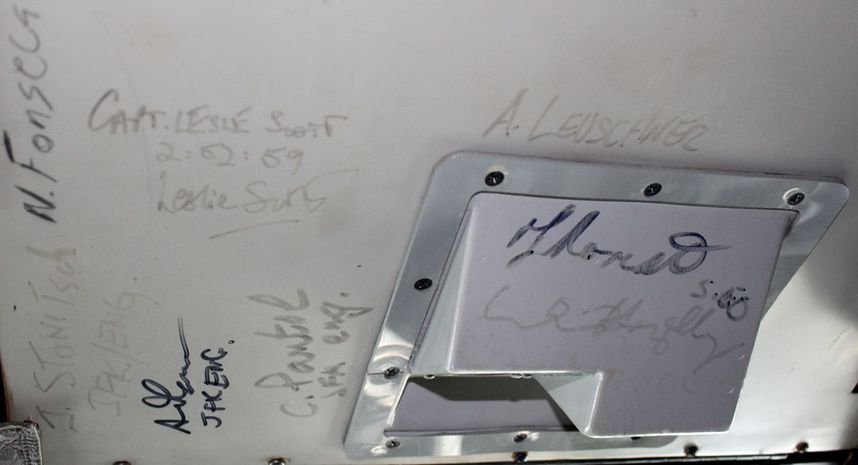
Behind the stick of this record-breaking flight was Captain Leslie Scott, whose autograph can be seen in the cockpit (beneath a reminder of that world record flight), alongside autographs of the crew from G-BOAD’s final flight on November 10, 2003.
For a time, this plane was also a Singapore Airlines Concorde – well, at least half of it was.
An ambitious partnership on the London-Singapore route from 1977 to 1980 saw the aircraft adorned with SQ’s iconic livery on the left side, while retaining British Airways stripe on the right.
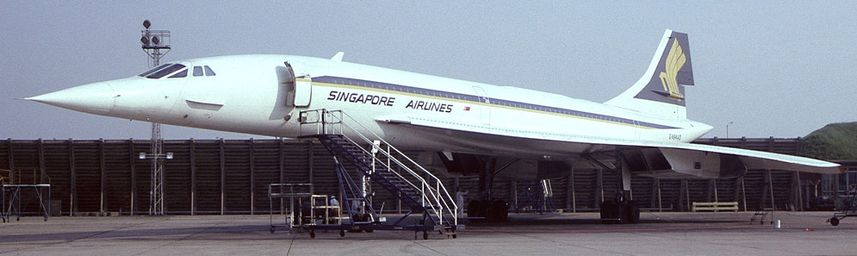
Even allowing for a brief refuelling stop in Bahrain, the Concorde slashed travel time between London and the Lion City to around eight hours.
After her final flight from London to New York in November 2003, having clocked up a staggering 23,397 hours in the air, Concorde G-BOAD was moved by barge to Pier 86 of the Hudson River Park, home to the Intrepid Museum.
During a visit to New York, the Intrepid Museum hosted Executive Traveller on this special private tour of the Concorde, including parts of the aircraft normally closed to the public.
Beyond first class: Concorde Class
BA considered the Concorde experience as being beyond mere first class, and decreed the exclusive service level worthy of being christened Concorde Class.
Yet what strikes every first-time visitor to the Concorde is how small and, by today’s standards, how cramped the cabin feels.
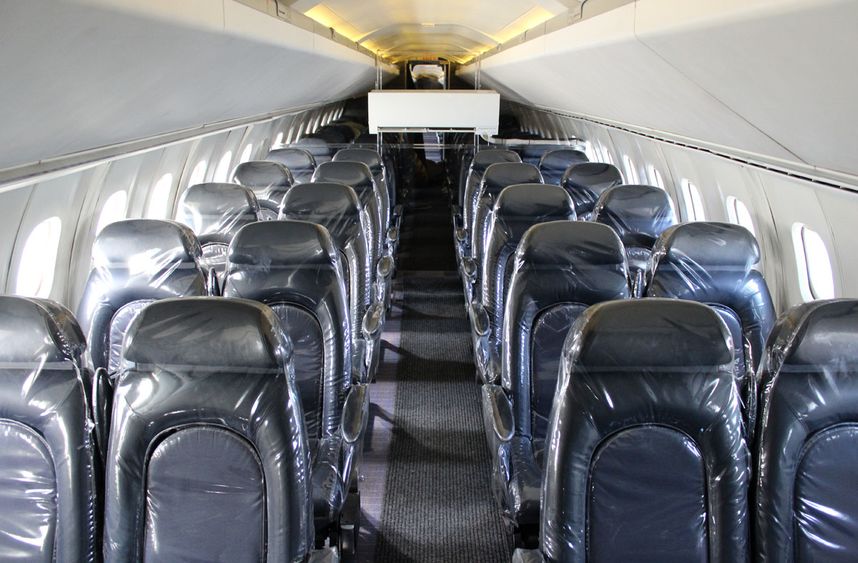
BA’s Concordes had 100 seats – 40 in the front cabin and 60 in the rear – arranged in a 2-2 layout, and at first glance you’d be forgiven for thinking this was the economy cabin!
(Although with trans-Atlantic flights rarely longer than 3.5 hours, making them quicker than your average Sydney-Perth trek, lie-flat beds simply weren’t necessary. Besides: why sleep when you can party, as many guests seemed to do?)
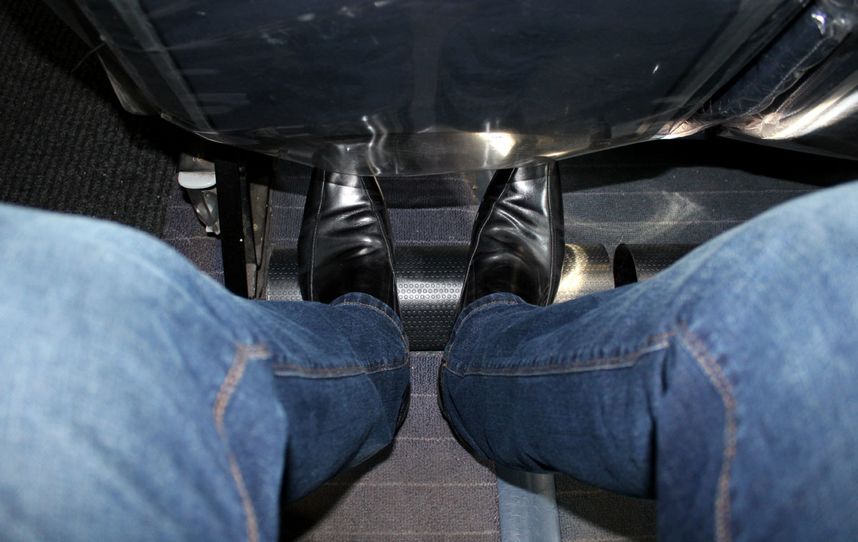
Here’s the legroom in Row 1, which would usually carry bragging rights on your boarding pass.
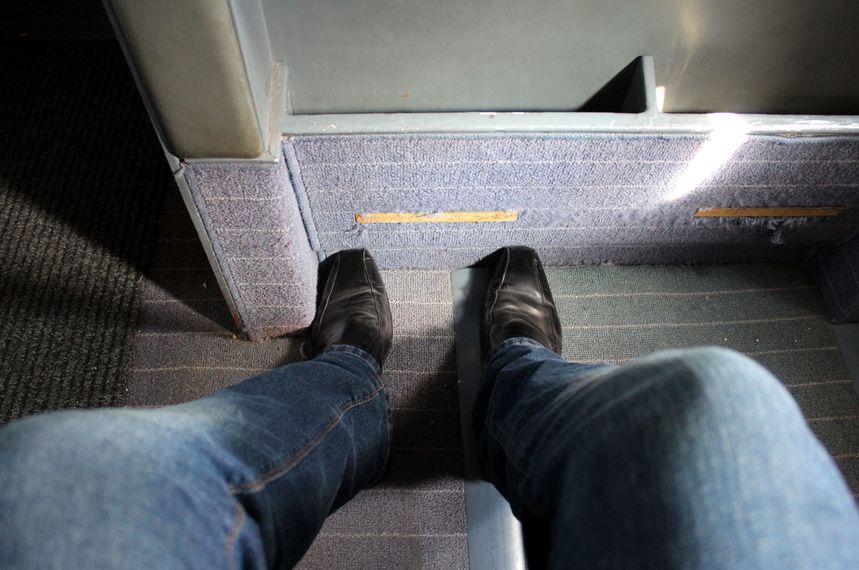
There were swing-up footrests, which could be removed for a little more space to stretch out.
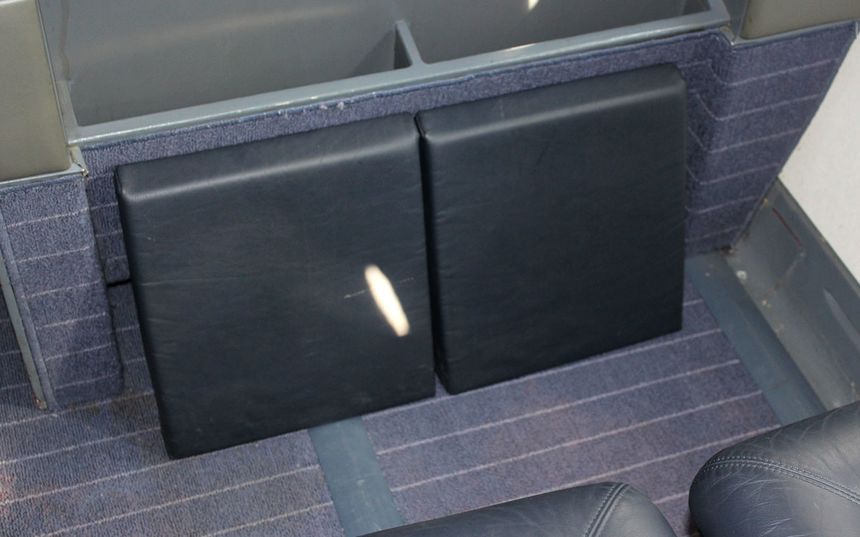
Further back there’s plenty of knee room, although this is more like today’s premium economy.
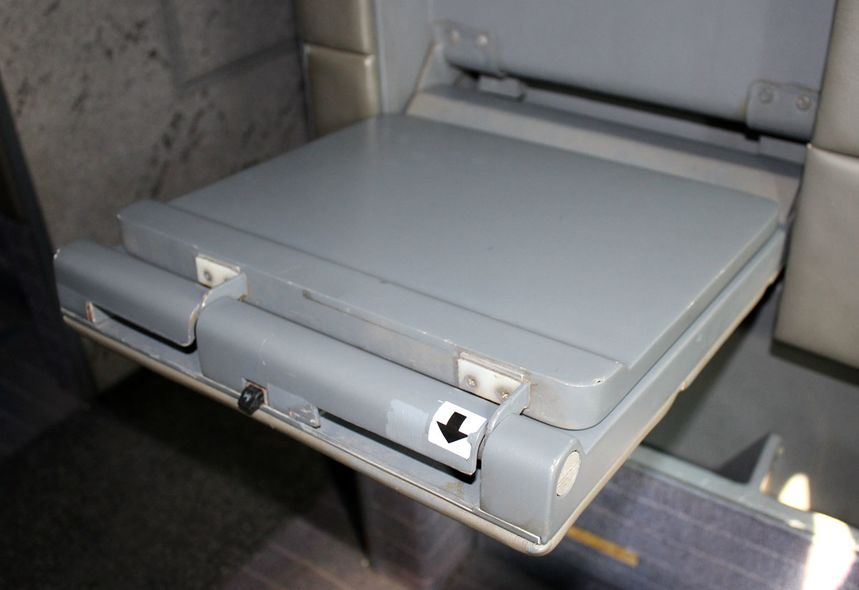
Row 1 passengers found tray tables folded down to unveil a seriously-sized dining space with plenty of room for the lobster and Champagne...
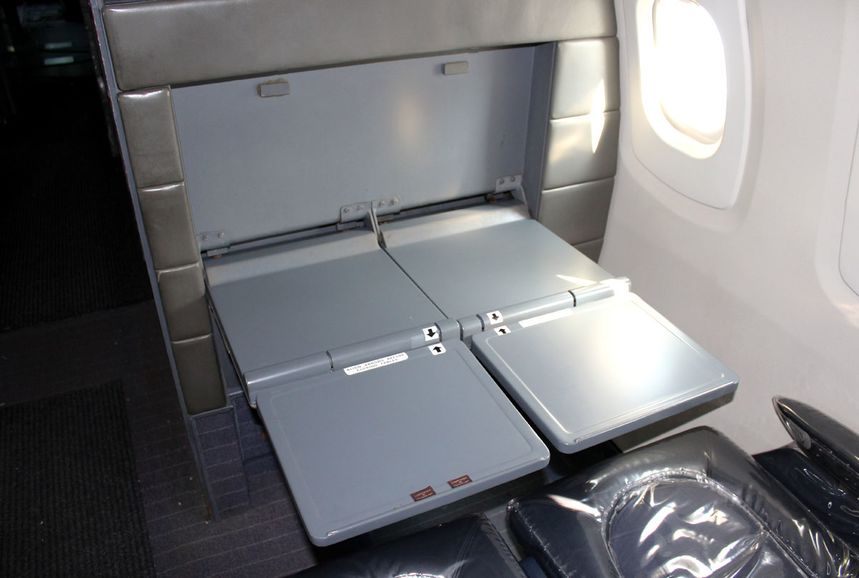
... and folded halfway, they made for a convenient cocktail table.
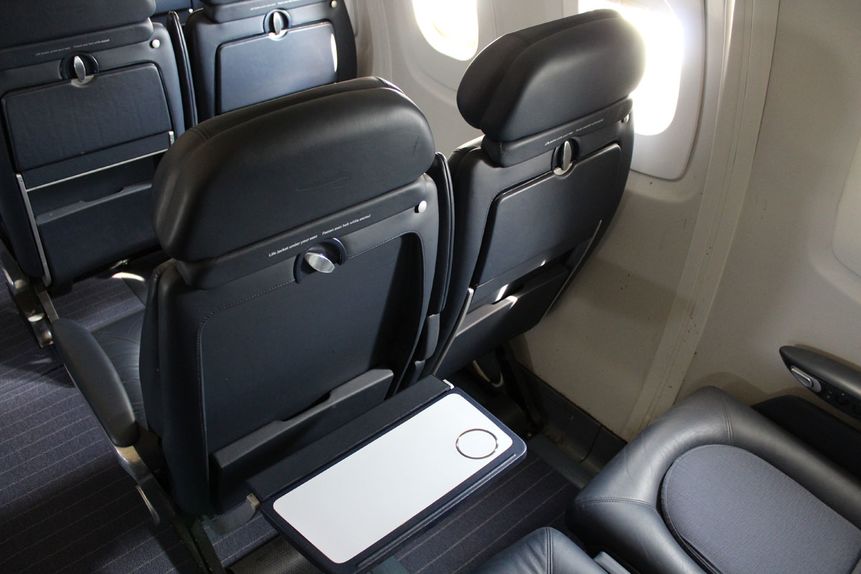
Away from the bulkheads, smaller and more conventional trays were the norm.
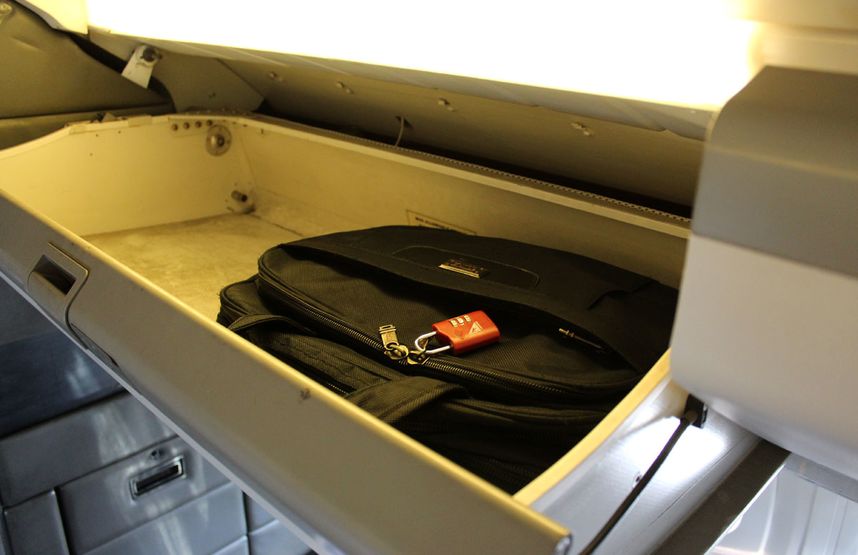
Concorde’s overhead bins are large enough to fit a slim bag, but would certainly struggle to accommodate today’s two- or four-wheeled cabin bags.
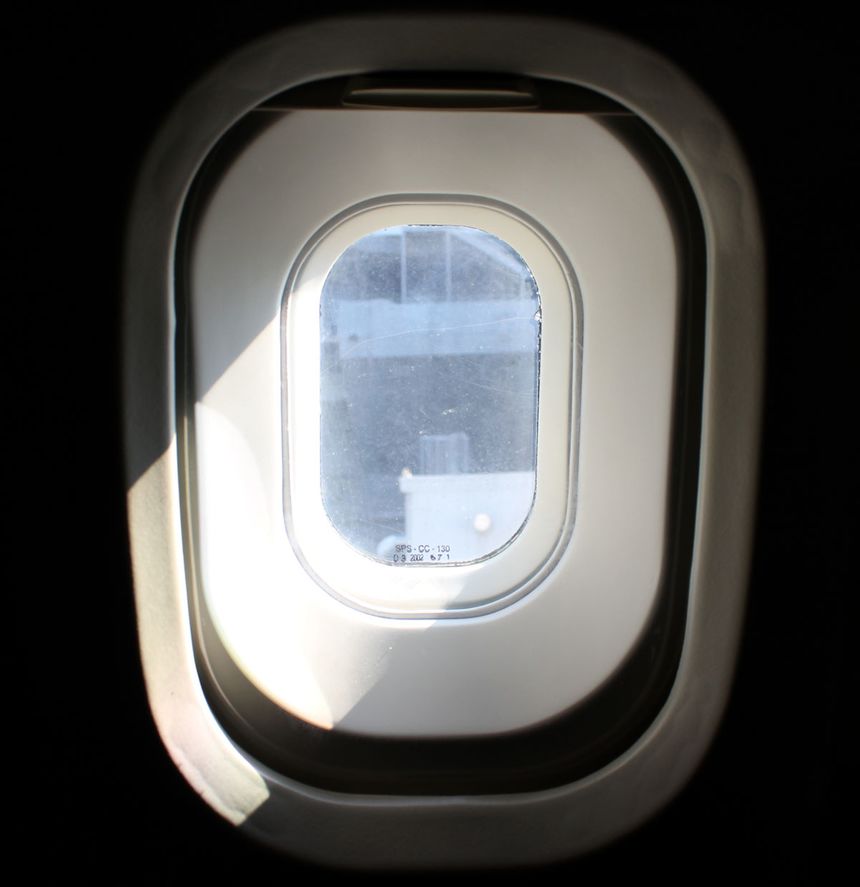
Visitors to the Concorde will also be struck by how small the windows are, although as the Intredpit Museum tour guide explains, this was a necessity of the aircraft’s supersonic design.
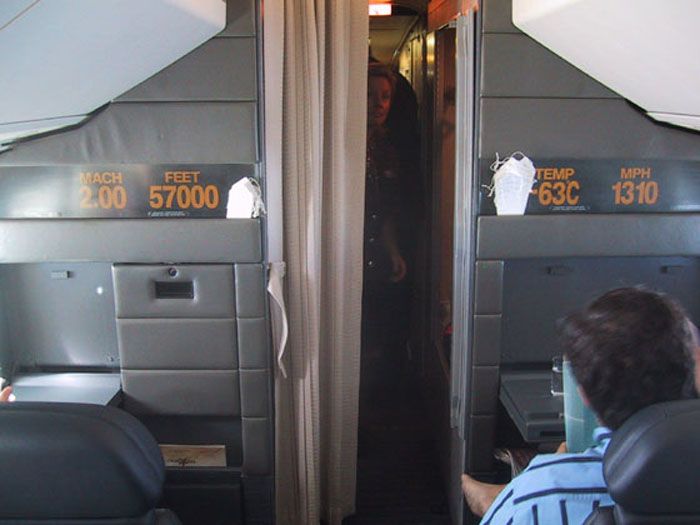
Screens at the front of each cabin informed passengers of the Concorde’s speed and altitude, along with the outside temperature.
The Intrepid Museum guide took us into the rear cabin – off-limits to the public, and normally seen only through a perspex screen – where the seats are without protective plastic covers, so everything is exactly as it was in those distant but dazzling days when the Concorde was flying.
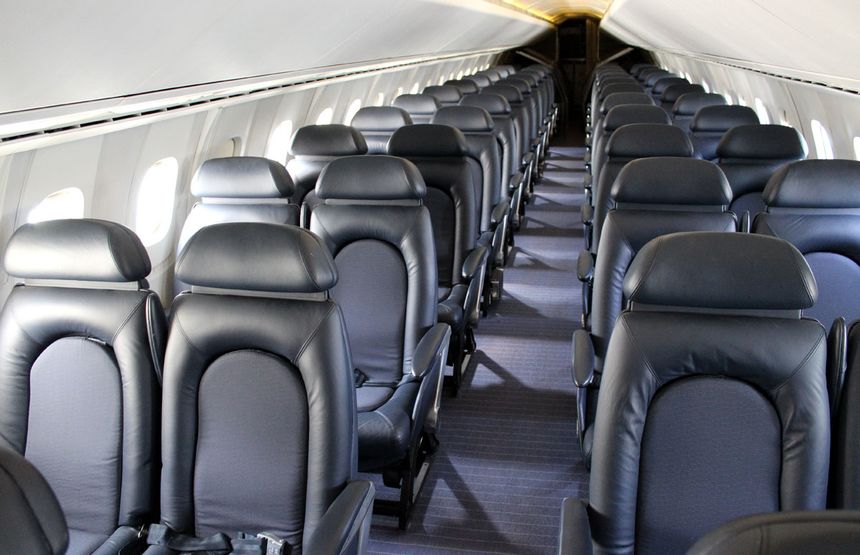
These newer-style seats afforded passengers audio-based inflight entertainment with a selection of radio channels at their fingertips.
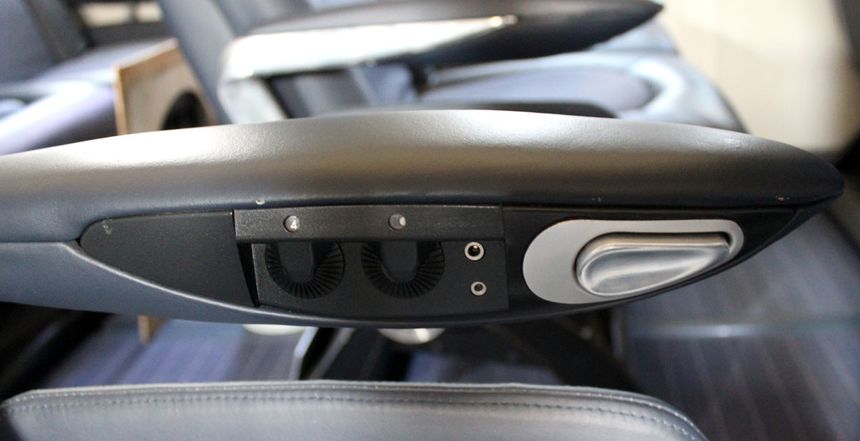
Inside the Concorde cockpit
The Intrepid Museum’s public tour of the Concorde also includes a visit to the flight deck.
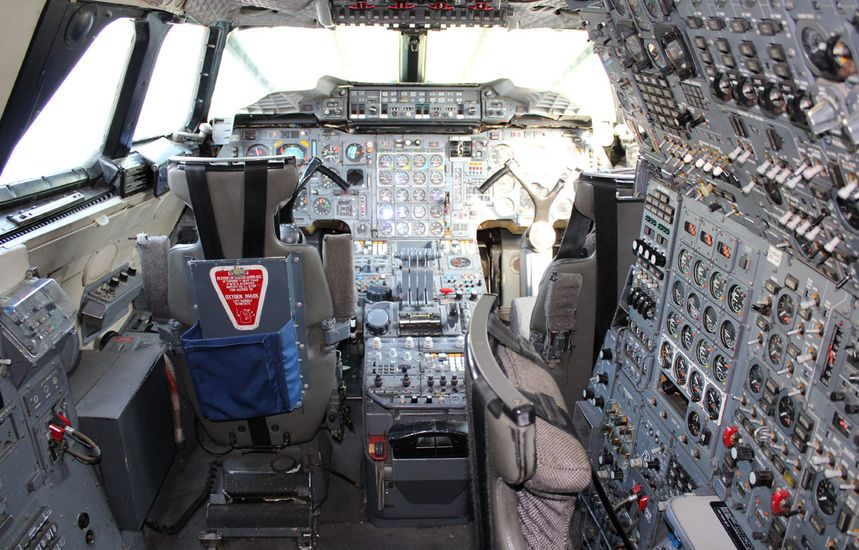
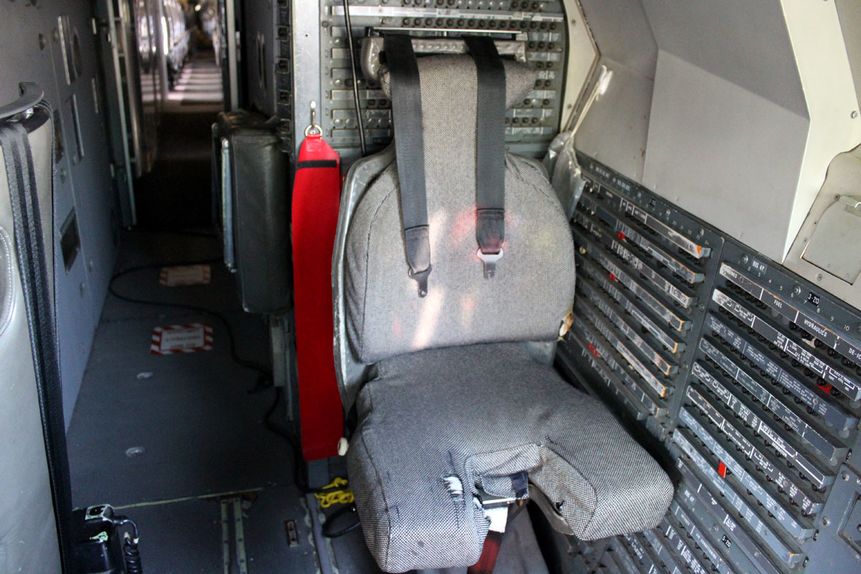
Prospective aviators are welcome to sit in the jumpseat...
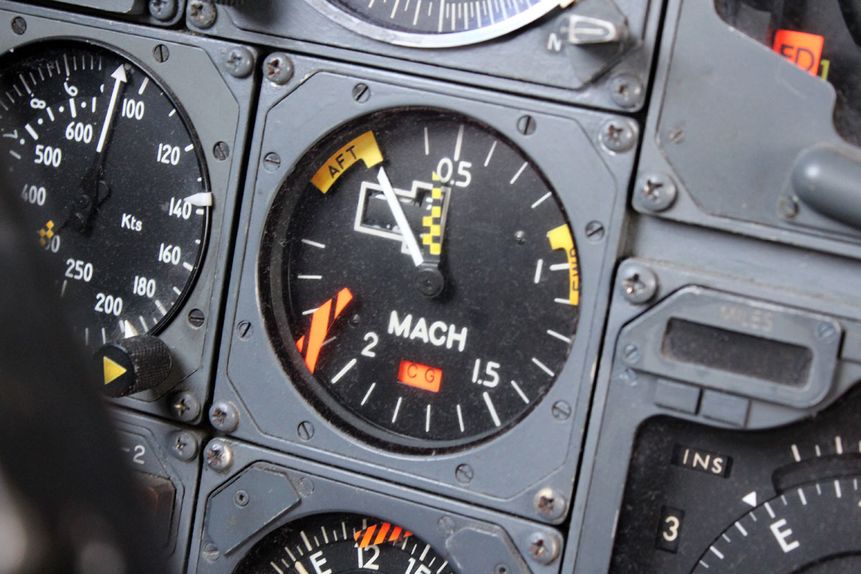
... and to stickybeak at the various dials, gauges and instruments, including the all-important Machmeter...
... and the lever to control the tilt of the Concorde's nose.
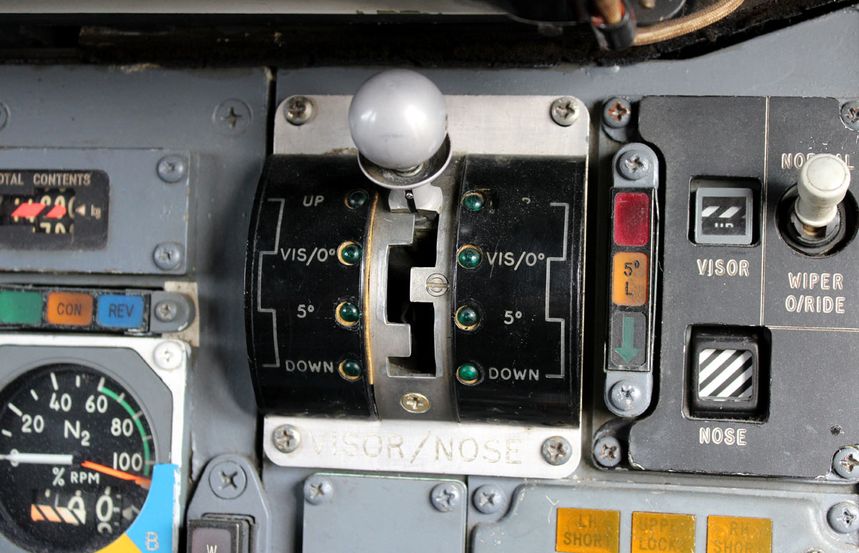
This was an essential control for the pilots, as the Concorde’s design ordinarily blocked their view of the tarmac below.
By way of example, here’s a view from the Concorde cockpit to New York with the nose raised in supersonic ‘cruise’ position.
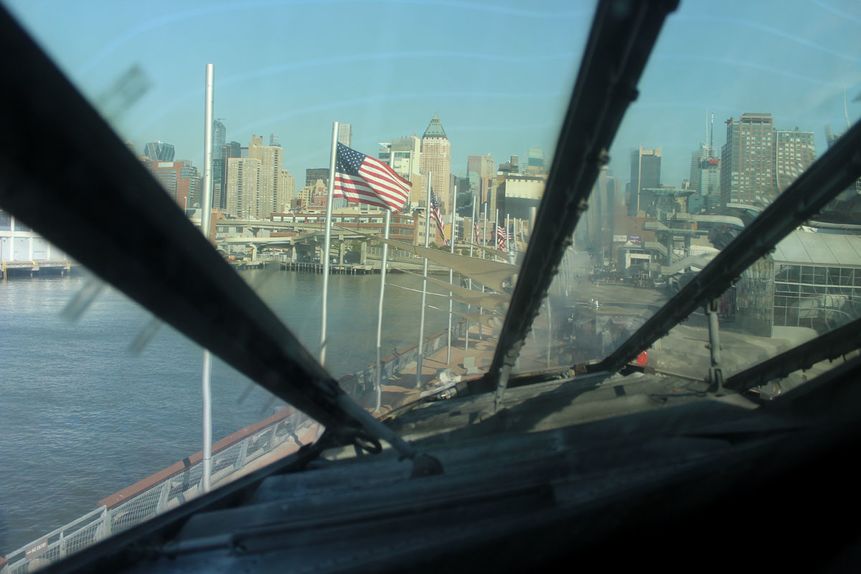
Lowering the nose for taxi, take-off and on landing considerably improved safety and the pilots’ viewing angle to the ground.
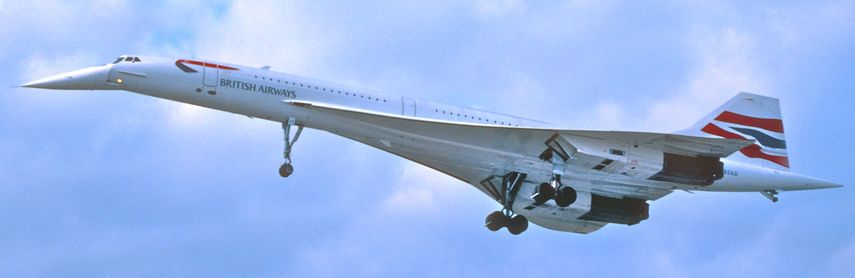
Another detail shared by the tour guide: the Concorde’s reflective white paint wasn't merely a design choice by British Airways, or indeed by Air France for its own Concordes.
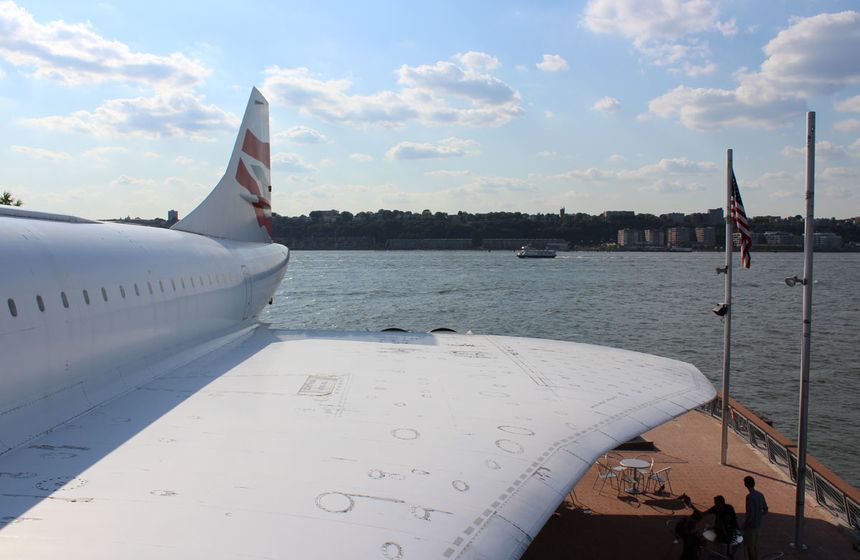
Instead, it helped prevent the aircraft from overheating at supersonic speeds by reducing its exterior temperature by 6-11°C – an impossible feat with a darker, heat-absorbing colour.
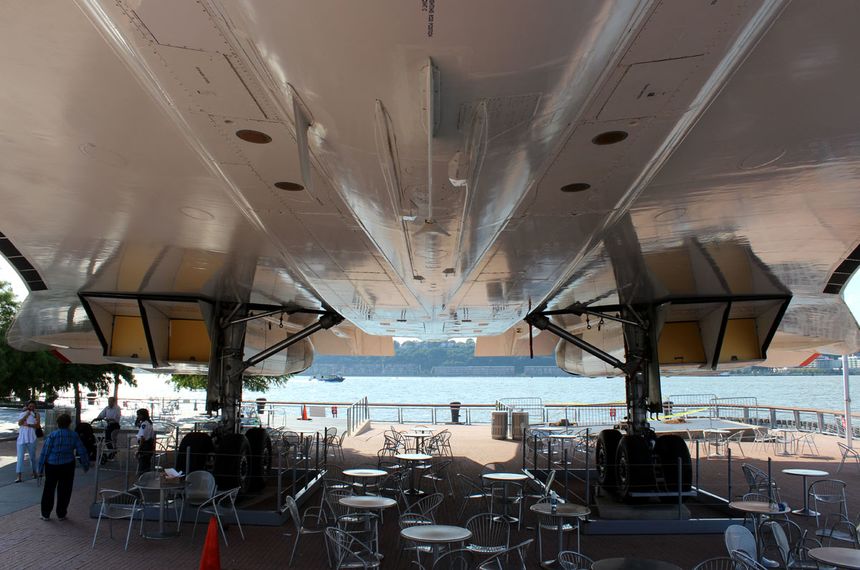
And while its wings are clipped, the Concorde today helps visitors avoid the heat by sheltering under it as they enjoy lunch.
The Concorde is one of several exhibitions at the Intrepid Museum, along with the namesake aircraft carrier USS Intrepid, the nuclear missile submarine Growler and the Space Shuttle Pavilion, home to NASA’s Enterprise orbiter which paved the way for the space shuttle program.
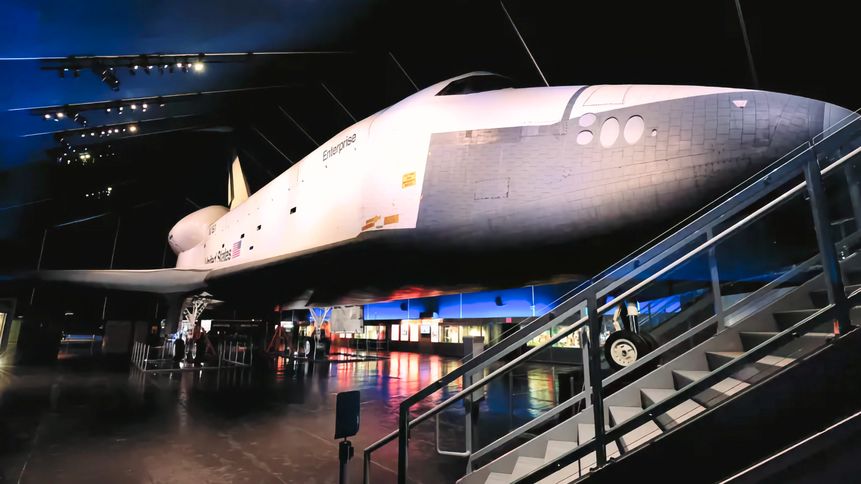
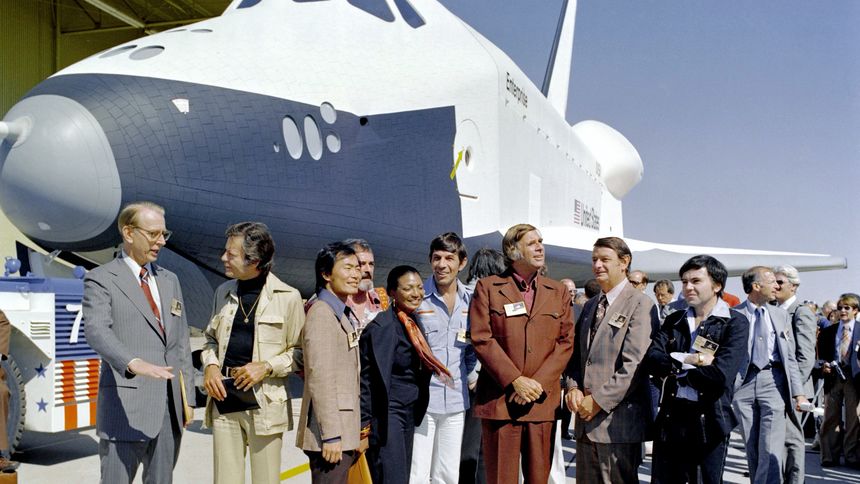
Originally planned to be named Constitution, the orbiter was christened Enterprise in honour of Star Trek.
Admission to the Intrepid Museum costs US$36 for adults and includes entry to the Intrepid, the Growler and the Space Shuttle Pavilion, with 20-minute guided Concorde Experience tours costing an additional US$11.
For more details, visit the Intrepid Museum website.