
Melbourne Airport gets controversial body scanners
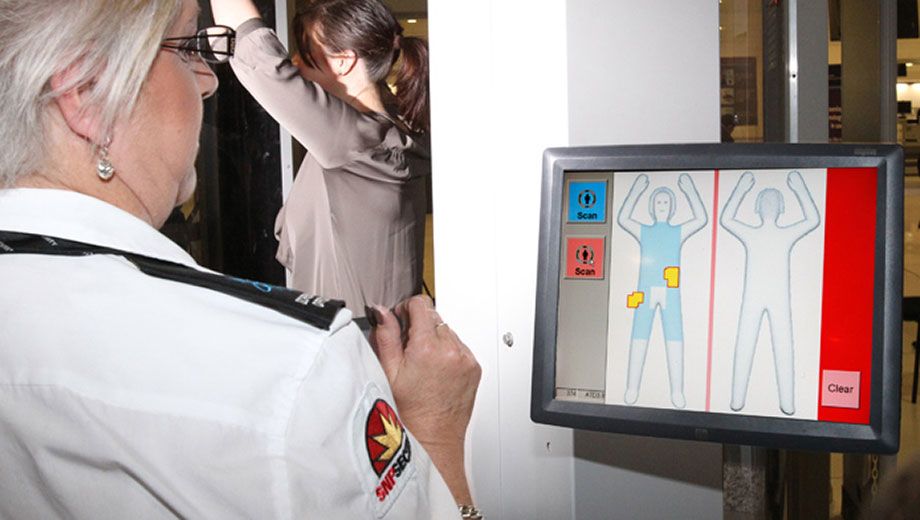
Melbourne Airport's international terminal will trial controversial 'millimetre wave' body scanners this month.
Passengers will be given the option of walking through the conventional 'arch' or using the new full-body scanner during the trial period, which starts on Monday September 5th and continues to the end of September.
In similar trials conducted at Sydney International Airport last month, over 4,000 passengers passed through the scanners over a three-week period – the first of whom was Federal Transport Minister Anthony Albanese (shown below).
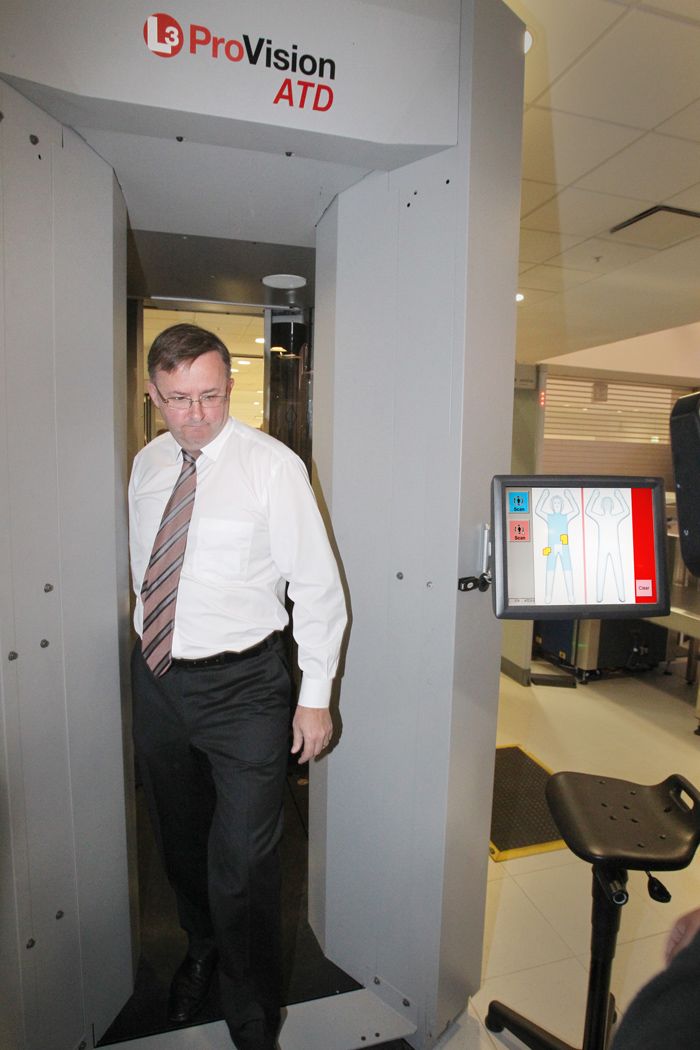
The millimetre-waves are about 10,000 times weaker than a mobile phone signal, and considered much safer than the backscatter x-ray scanners that are used at some US airports.
There is not scientific consensus over the safety of the scanners, though. One study by Los Alamos National Labs argued that standards had only been established for radio frequency exposure up to 300 gigahertz, and millimetre wave scanners were above this range.
Even though the strength of the waves is extremely low, the close-to-terahertz radiation used by the scanners could damage DNA in cells.
This is the second time the scanners have been tested in Australian airports. They were previously trialled in Sydney, Melbourne and Adelaide airports in October/November 2008, with over 70,000 passengers volunteering to be "imaged" by the machines. The government did not say why it needed to re-test the machines following the initial trial.
What the scanners will show
The scanners detect metal and non-metal items under clothing, and then pin-points where the item is hidden using a generic human outline (not the 'naked' images generated by scanners in the USA.
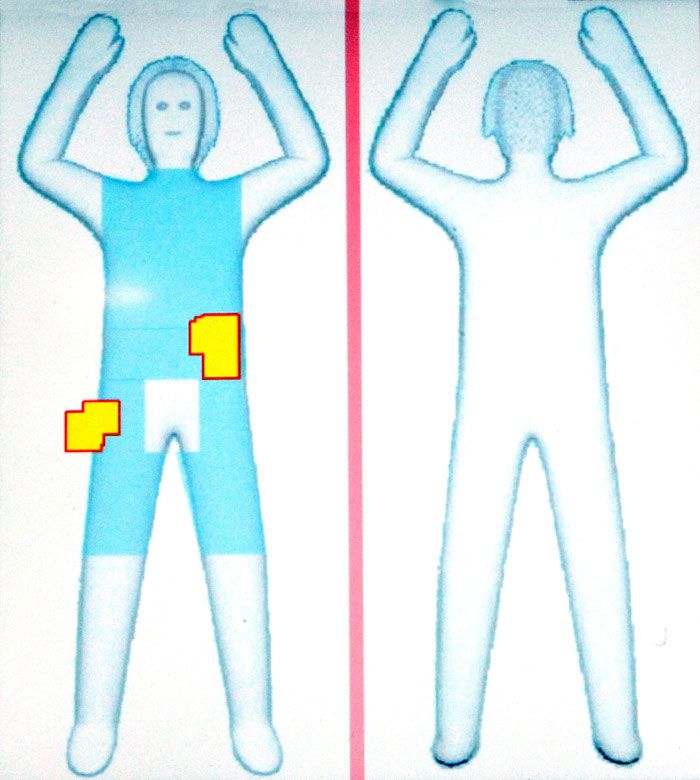
The government says the machines will not store any imagery of passengers (however, the US government also made this assurance, before saved passenger images were leaked to a tech blog by a whistleblower.)
Passengers not wanting to try the body scanner will proceed through standard screening procedures.
The government gave no warning of the introduction of the millimetre wave scanners, and has instead been focusing on the introduction of backscatter x-ray scanners to be used only on incoming passengers suspected of concealing drugs internally.
Another type of scanner that emits no radiation at all, but simply senses emissions from the human body was recently tested at Sydney Airport.