
Five things you need to know about Air New Zealand's Airbus A321neo
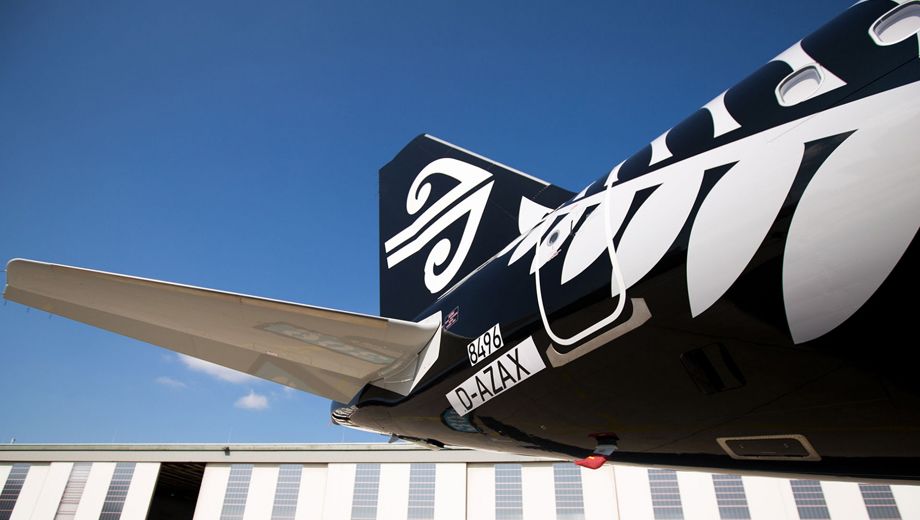
Air New Zealand's first Airbus A321neo jets will take wing from late November, darting between Auckland and Sydney, Melbourne and Brisbane as the Star Alliance member seeks to sharpen its edge on the competitive trans-Tasman market.
An upgraded version of AirNZ's workhorse Airbus A320 family, this is the first of 14 A321neo aircraft to join the fleet – seven of which will be dedicated to the busiest routes of the Kiwi-Aussie corridor, while six of the smaller A320neo jets (arriving from February 2019) are slated for routes such as Wellington-Sydney and Christchurch-Melbourne.
Flights commence November 23 with Auckland-Brisbane (NZ739) now confirmed as the first route. So what's in store for trans-Tasman travellers on air New Zealand's Airbus A321neo?
No business class
Air New Zealand opted to skip business class on its A321neo jets, fitting them out instead with 214 economy seats from tip to tail.
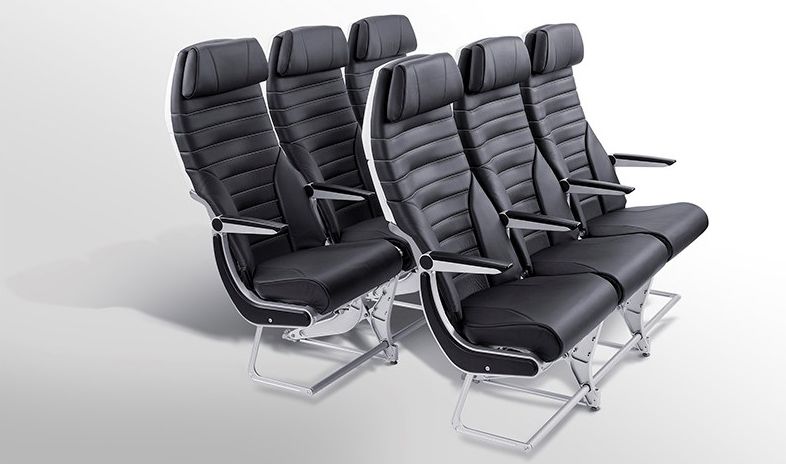
However, there are still some differences from row to row and even seat to seat...
Which seats have the most legroom?
Apart from the bulkhead-facing row 1 and the exit rows (17 and 27), the most generous legroom is afforded to 42 designated Space+ seats in the front: these are at rows 2-7 as well as the left-side of row 8 (seats 8A, 8B and 8C) and row 9 (seats 9A, 9B and 9C).
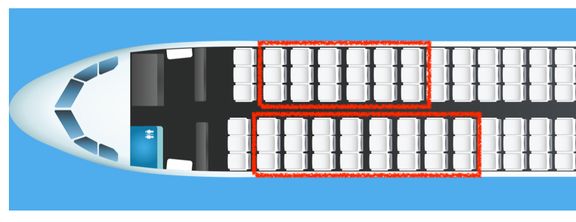
Even so, not all Space+ seats are equal: while most Space+ seats have a pitch of 83cm (32.7"), nine have their the pitched pruned to 81cm (31.9") – this seatmap denotes the location of the less spacious Space+ seats with purple dots.
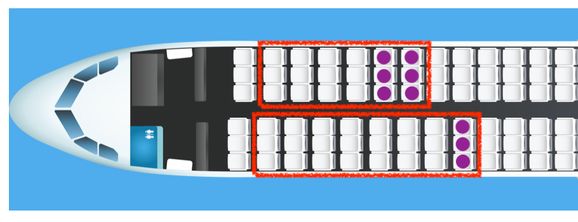
To break this down for when you go to select your seat: Space+ passengers on the left-side of AirNZ's A321neo (the A, B and C seats) from rows 2 through 8 enjoy a pitch of 83cm, but at row 9 this drops back to 81cm.
However, if you're in any of the right-side Space+ seats (D, E and F), 83cm is yours only from rows 2 through 5 – plonk yourself into rows 6 or 7 and you'll notice the reduced 81cm pitch.
Space + seats can be selected for free by Gold and Elite members of Air New Zealand's Airpoints frequent flyer scheme, as well as Koru members, while the A321neo's first few rows will also be available as 'Works Deluxe' class with the middle seat left vacant.
Also read: Air New Zealand offers free Gold status match to Qantas, Virgin Australia frequent flyers
Legroom in the A321neo's standard seats is even more of a lucky dip.
Rows 10 through 16 on the left side, and 8 through 16 on the right side, see the pitch trimmed to 76cm (30").
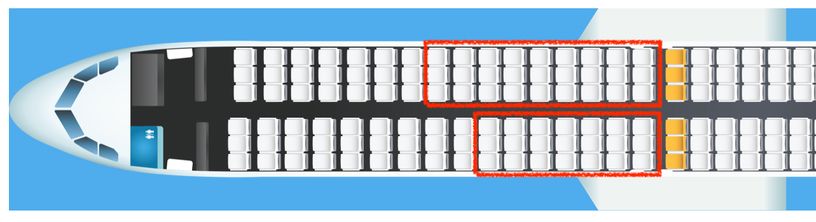
But the squeeze really sets in from row 18, where almost every row on the left side of the plane (seats A, B and C) is at a closely-spaced 73.6 cm (29") – with the notable exceptions of row 35 and 36 (marked below with purple dots), where you get a smidge extra knee-room courtesy of a seat separation of 76cm (30”).
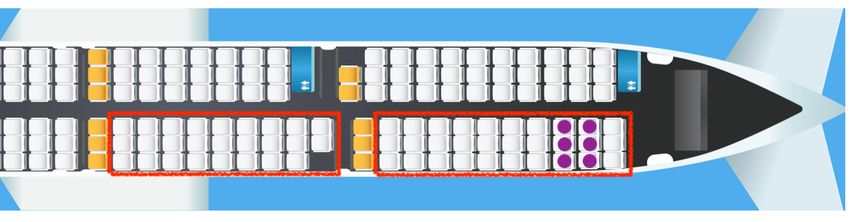
This is reversed on the right side of the A321neo: the D, E and F seats at rows 18 through 37 offer 30 inches of pitch, although rows 36 and 37 are set 29 inches apart (marked below with purple dots).
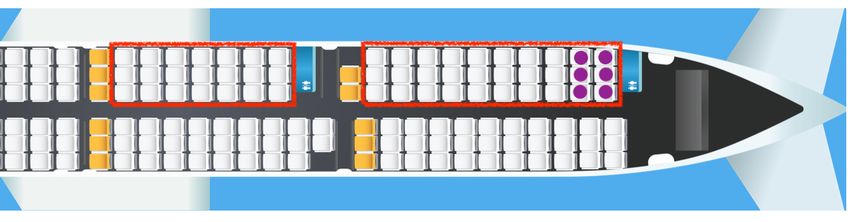
If it helps any, Air New Zealand says the curved design of the A321neo's leather-clad slimline seats mean that passengers "sink further into the seat back creating up to 7 percent more usable space when compared with the equivalent pitch on the existing fleet."
A rethink of the original A320 design has also seen Airbus increase the size of the overhead luggage bins by around 25 percent.
A middle seat you might actually like
"I want the middle seat!" exclaimed nobody ever.
That could change on Air New Zealand's A321neo, as the middle seats in every row (the B and E seats) are 46cm wide, compared to 44cm for the window and aisle seats, to help avoid that battle for the armrests.
“The slightly wider middle seat helps balance out the fact that window and aisle seat customers enjoy a greater sense of space," explains Anita Hawthorne, Air New Zealand's General Manager for Customer Experience.
"We currently have many customers who state a preference for window or aisle seats and it’s possible the new design may see the middle seat get a boost in popularity."
Those seat widths are also up from the standard 43cm of Air New Zealand's current A320 fleet.
Power: AC no, USB yes
While none of Air New Zealand's Airbus A321neo seats are fitted with an AC socket, the 10" Panasonic inflight entertainment system fitted into the rear of each seat includes two USB sockets.
One is the familiar rectangular USB-A type, the other is the slim USB-C socket slowly appearing on an increasing number of laptops – including Apple's MacBook family, Dell's 2018 XPS 13 and HP's Elite xP 2-in-1 – and tablets such as Samsung's Galaxy TAB series.
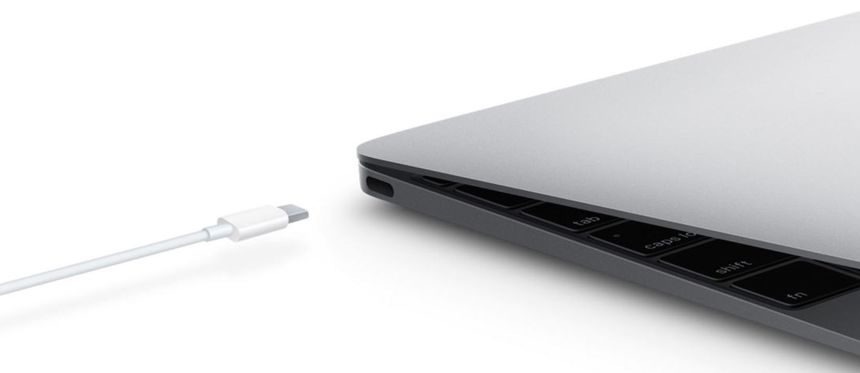
A spokesman for Panasonic tells Australian Business Traveller that the USB-C ports will intelligently switch to serving up more power in USB-C PD (Power Delivery) mode if you connect a laptop or tablet, so that even those super-thirsty bits of kit can be recharged during the flight.
Inflight WiFi
As each A321neo rolls out of the factory it will come fitted with inflight Internet so that trans-Tasman flyers can stay connected above the clouds.
Pricing will be based on how long you spend online rather than how much data you download; at the time of writing, Air New Zealand's website lists options for a one-hour pass and a 'full flight' pass.
The former currently has no pricing, but based on NZ$9 for one hour on WiFi-enabled Boeing 777 flights to Asia, North America and Europe, one hopes that an hour of trans-Tasman WiFi on the A321neo will come in around NZ$5-6.
The trans-Tasman flight pass is currently shown as NZ$30 although some readers report this has dropped to a far more appealing NZ$20.