
Eurostar to launch high-speed trains between London, Germany
The combined network of Eurostar and Thalys would link five countries under the new Green Speed banner.
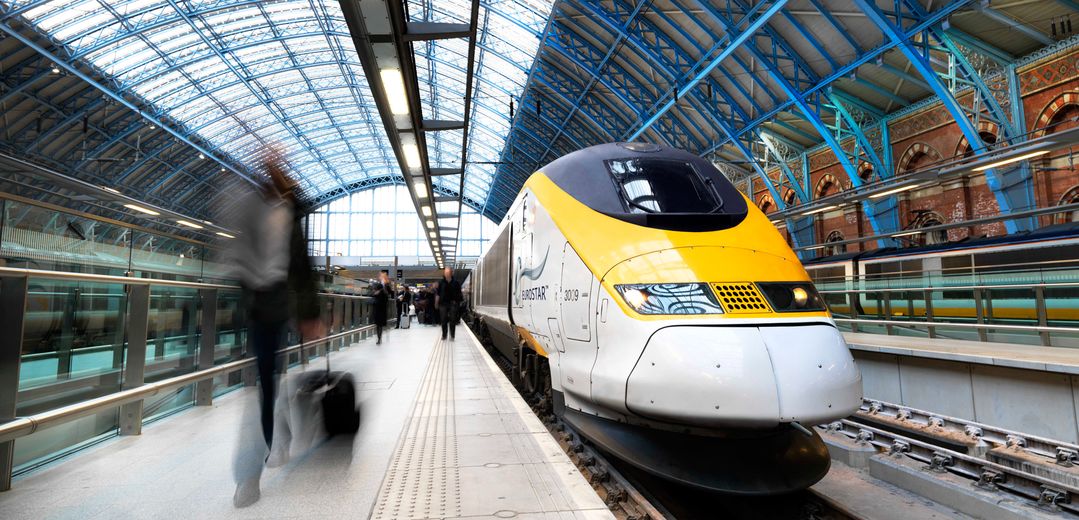
Eurostar high-speed rail services linking the United Kingdom with Germany will be introduced following the merger of Eurostar International and Belgian railway operator, Thalys Group.
Now approved by the European Commission, the combination of the two brands will see cities in Germany’s mid-northwest including Cologne, Dusseldorf and Dortmund added to the Eurostar network – although there’s no indication yet on when those services would start running.
Dubbed ‘Green Speed’ as a project name, the overarching company known as Eurostar Group will see better train connections and a range of digital tools designed to improve information and communication for passengers.
Currently, Eurostar operates direct services between London St Pancras and Paris, Brussels, Amsterdam and Rotterdam, along with seasonal services to the southern French cities of Marseille and Bordeaux. With the addition of Germany, the merger takes the popular high-speed rail brand’s network to five countries.
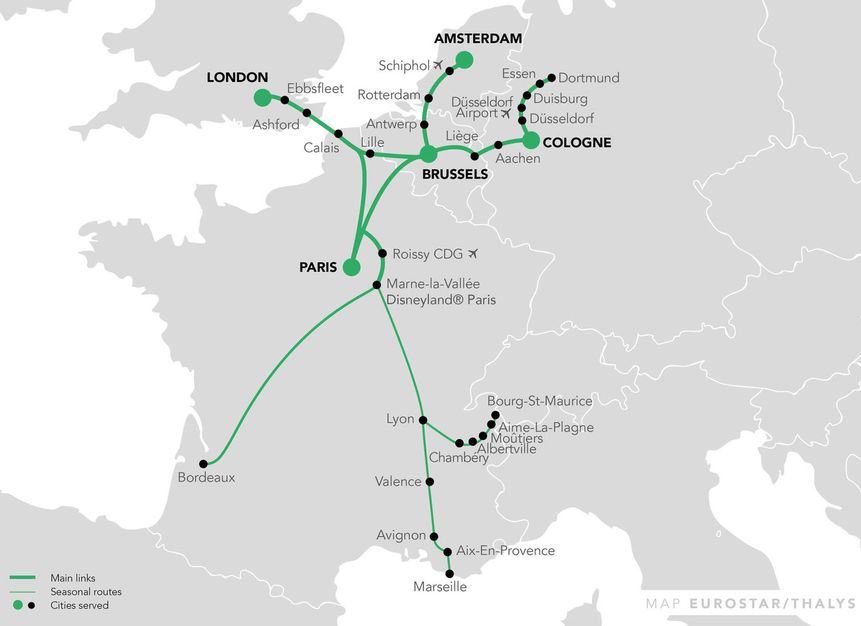
The forthcoming addition of Germany builds further on Eurostar’s march across Europe and follows its expansion with direct services between London and Amsterdam, introduced in 2020.
Passengers moving between London and Cologne by rail must currently change trains in Brussels from the Eurostar to a German ICE service, making a journey of just over four hours - one expected to become much quicker on the expanded Eurostar Group network.
Eurostar and Thalys will also merge their respective Club Eurostar and My Thalys World loyalty schemes into “a single passenger loyalty programme” to reward frequent riders, according to a statement issued by both operators.
Depending on their status, members of the free-to-join programs enjoy perks including use of Eurostar Business Premier lounges and partner facilities, seat upgrades and access to discounted redemption windows throughout the network.
Between them, Eurostar and Thalys run 112 trains per day carrying more than 18.5 million passengers per year, with Eurostar expecting to be carrying 30 million travellers annually within a decade.
A big part of this growth is likely to come from Paris following a recent move by the French government outlawing short-range flights where a train or bus journey of under 2.5 hours was available.
One impacted route could be Paris to Brussels, with the 264 kilometre journey taking around 90 minutes on the train or an hour by plane. While air is slightly faster at one-hour, couple the flight duration with pre-departure formalities and city-airport travel time at both ends, making the train a clearly more efficient option.
For those with more time, overnight rail travel in Europe is making a comeback thanks to some innovative concepts in new hotel-style sleeper trains, and restoring and revitalising classic rolling stock. Aside from the environmental advantages of rail travel over flying, the sheer elegance and romance of riding the rails is likely to entice travellers to see Europe by train once again.